
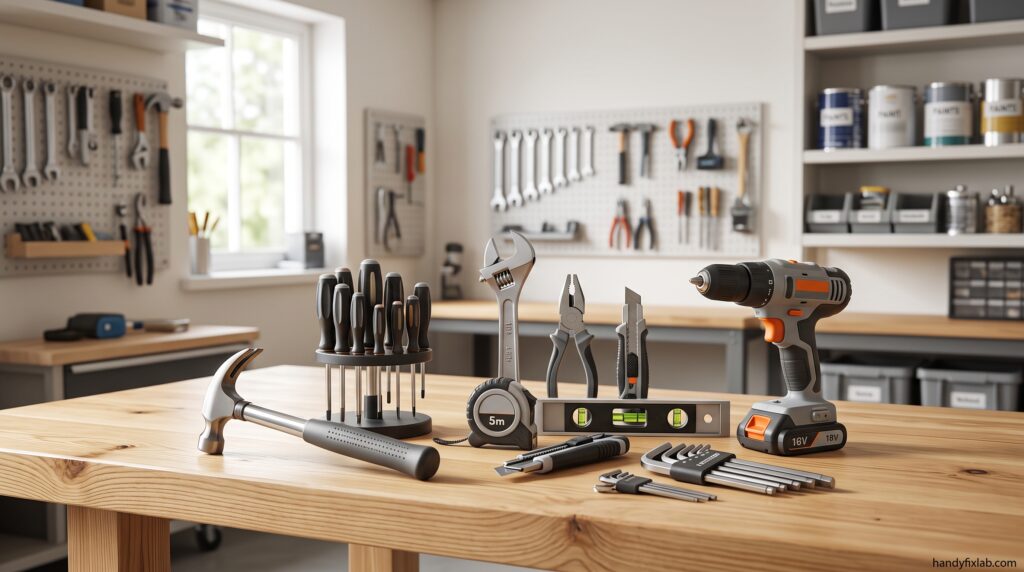
The essential tools for homeowners don’t have to be expensive or complicated. A small collection of reliable tools can help you handle everyday tasks such as assembling furniture, hanging pictures, tightening loose hardware, and making basic home repairs.
If you are starting from scratch, the best approach is to buy a few versatile tools first and add more only when a specific project requires them. This keeps your toolbox useful without filling it with tools you rarely use.
Essential Tools for Homeowners to Start With
The essential tools for homeowners can form a simple beginner toolkit without taking up much space. Start with these basic tools:
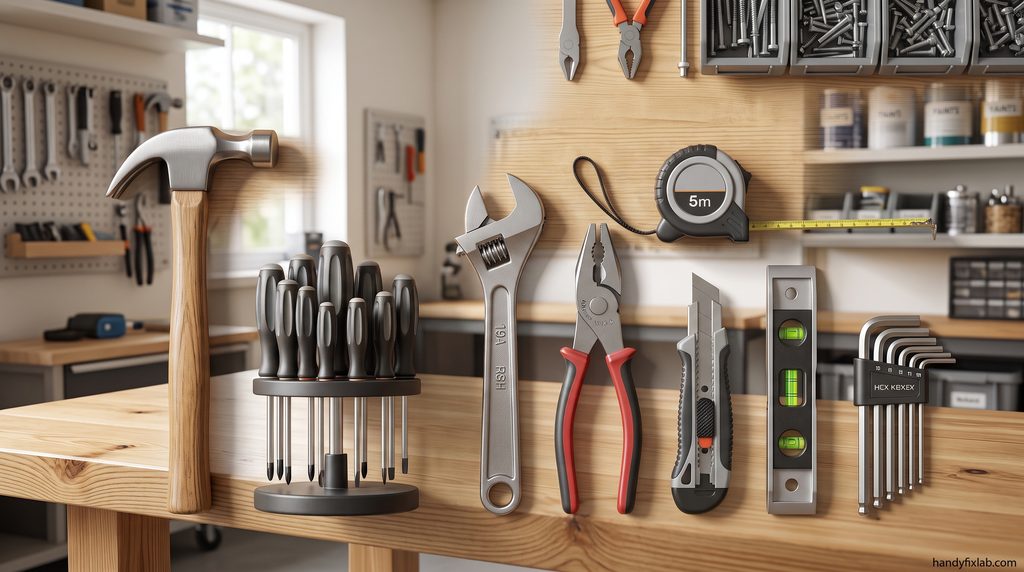
Screwdriver set: A set with Phillips and flat-head screwdrivers in several sizes is useful for furniture, cabinet hardware, door handles, switches, and many other household tasks. A multi-bit screwdriver can also save space.
Claw hammer: A medium claw hammer is useful for driving and removing nails, tapping objects into position, and handling small repair jobs around the house.
Tape measure: Measuring before cutting, drilling, mounting, or buying materials can prevent many unnecessary mistakes. A standard tape measure is one of the simplest tools you will use repeatedly.
Pliers: Combination or slip-joint pliers are useful for gripping, holding, and turning small parts. Needle-nose pliers can be added later when you need to reach into narrow spaces.
Adjustable wrench: An adjustable wrench can handle different sizes of nuts and bolts without requiring a large collection of individual wrenches. It can also be useful for certain accessible plumbing repairs.
Utility knife: A good utility knife is useful for opening packages, cutting cardboard, trimming certain materials, and many small household jobs. Always retract or safely store the blade when you are finished.
Level: A small spirit level helps you install shelves, pictures, cabinets, and other items without ending up with something noticeably crooked.
Hex key set: Many pieces of furniture and household hardware use hex screws. A small set of hex keys takes up little space and can be surprisingly useful.
You can gradually expand your collection as you discover which tools you actually use. These basic home repair tools can cover a large number of simple household tasks without requiring a workshop.
One Power Tool Worth Adding
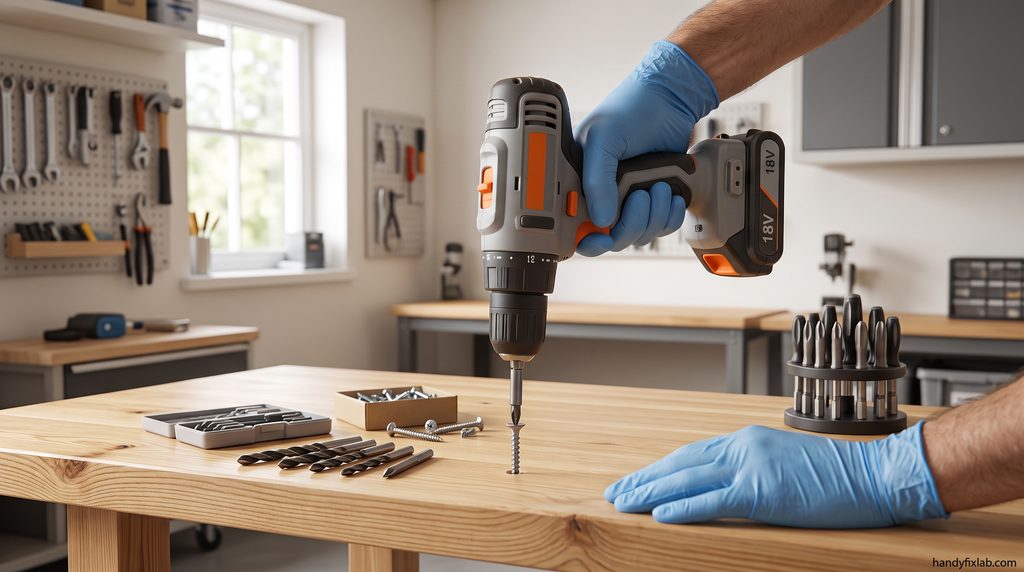
Once you start doing more DIY projects, a cordless drill/driver is one of the most useful additions to a beginner’s toolbox.
A drill can make holes for mounting shelves and other items, while the driver function can help install and remove screws much faster than using a manual screwdriver.
You do not necessarily need a large power-tool combination kit when you are starting out. A basic drill/driver with suitable bits can be enough for many common projects. Real-world discussions among new homeowners also frequently point to a drill as one of the first power tools worth adding, while recommending that more specialized tools be purchased when an actual project calls for them.
If you eventually take on larger projects, you can add other power tools one at a time instead of buying everything at once.
Basic Safety and Smart Buying
Buying tools is only part of becoming comfortable with home repairs. You also need to use them safely.
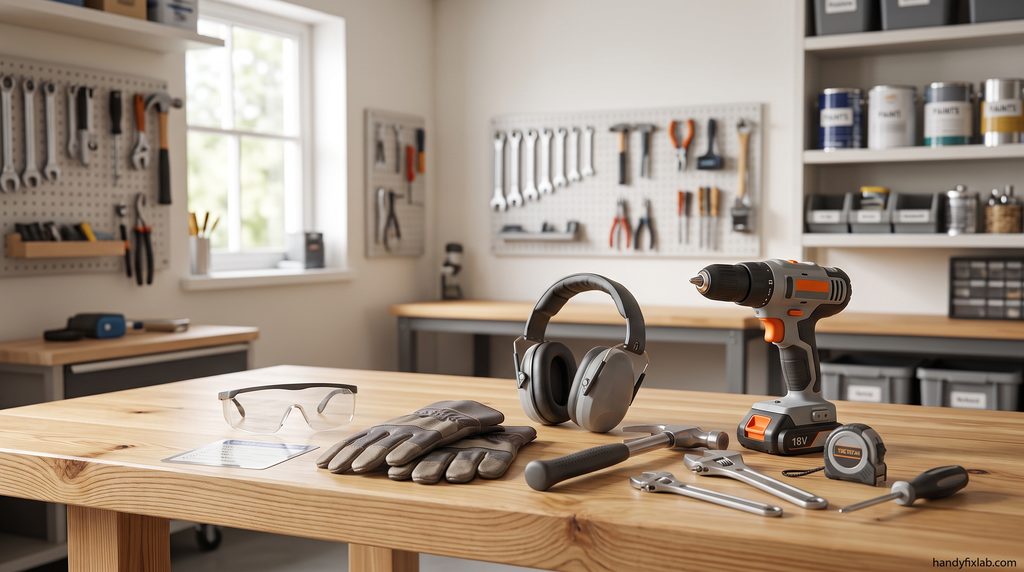
Inspect a tool before using it, especially if it has a damaged handle, loose part, worn cord, cracked housing, or other obvious problem. Use the tool for its intended purpose and follow the manufacturer’s instructions.
For power tools, wear appropriate eye protection and use other protective equipment when the job requires it. Keep the work area clear and avoid rushing through a task simply because it looks easy. OSHA provides safety guidance for using hand and power tools, including keeping tools in safe condition and using appropriate protection for the hazards involved.
The same idea applies to buying tools: do not buy a specialty tool just because it looks useful. Buy it when you have a real need for it.
For example, you may eventually need tools specifically for electrical work, but owning a tool does not automatically make a complicated or hazardous repair suitable for a beginner. When a repair involves significant electrical, structural, or other serious hazards, getting qualified help may be the safer choice.
A Simple Beginner Tool Checklist
If you are building your first toolbox, start with:
- Screwdriver set
- Claw hammer
- Tape measure
- Pliers
- Adjustable wrench
- Utility knife
- Small level
- Hex key set
- Safety glasses
- Cordless drill/driver
You do not need to buy everything on the same day. Start with the tools you are most likely to use, keep them together in an accessible toolbox, and add new tools as your home and projects require them.
The goal is not to own the biggest toolbox. It is to have the right tools for the jobs you actually do.
If you are learning how to handle basic home repairs, start with simple projects and build your skills gradually. Your toolbox can grow along with your experience.
These essential tools for homeowners can handle many common DIY tasks, and you can expand your collection as your projects become more advanced.