
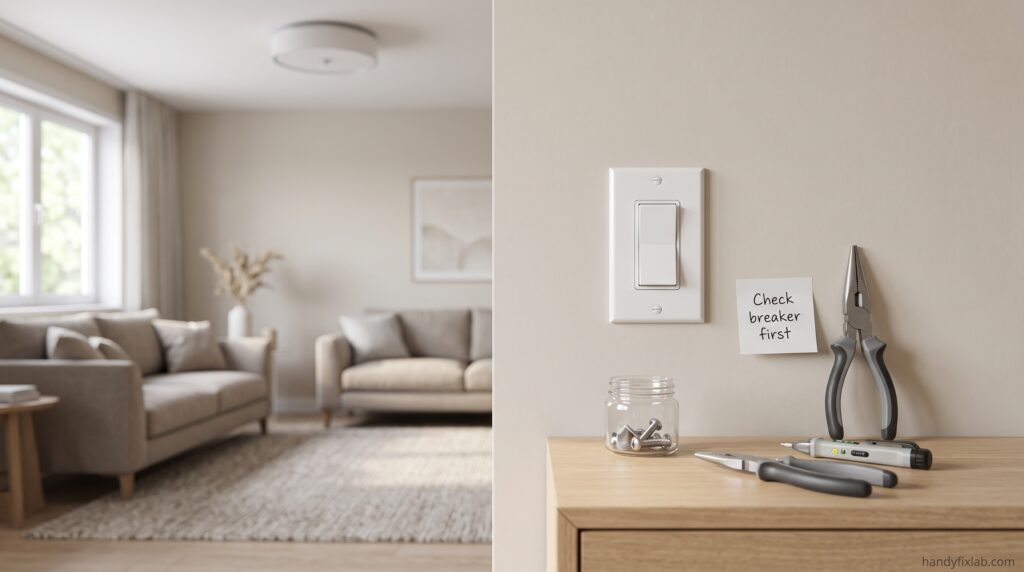
A faulty light switch is not always the reason a light stops working. A burned-out bulb, tripped breaker, faulty fixture, or wiring issue can cause similar symptoms.
Before opening an electrical box, start with the simple checks below. If you notice heat, burning smells, sparks, crackling, or repeated breaker trips, stop and contact a qualified electrician. For more electrical safety guidance, see the U.S. Consumer Product Safety Commission’s electrical safety information.
Why Is My Light Switch Not Working?
A light switch may stop controlling a light because of:
- A burned-out bulb
- A tripped circuit breaker
- A tripped GFCI outlet
- A failed light fixture
- A worn or faulty switch
- A loose or damaged electrical connection
The safest approach is to check the simple possibilities first because a faulty light switch may not be the actual cause of the problem.
5 Simple Checks to Try
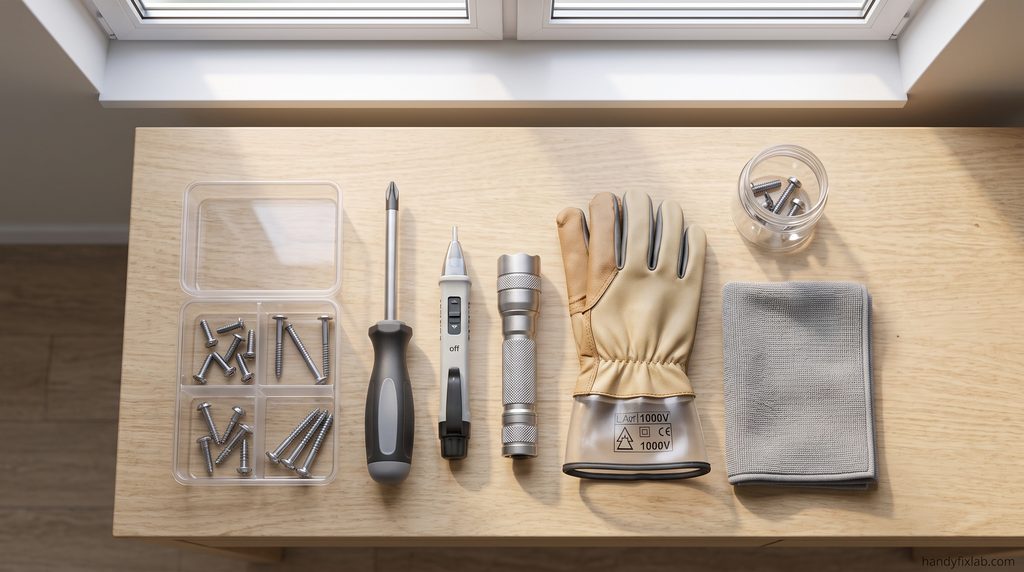
1. Check the Light Bulb
Start with the easiest possibility.
Replace the bulb with one you know is working and make sure it is the correct type and rating for the fixture. If the light comes on, the switch was probably not the problem.
If the fixture has multiple bulbs, check each one.
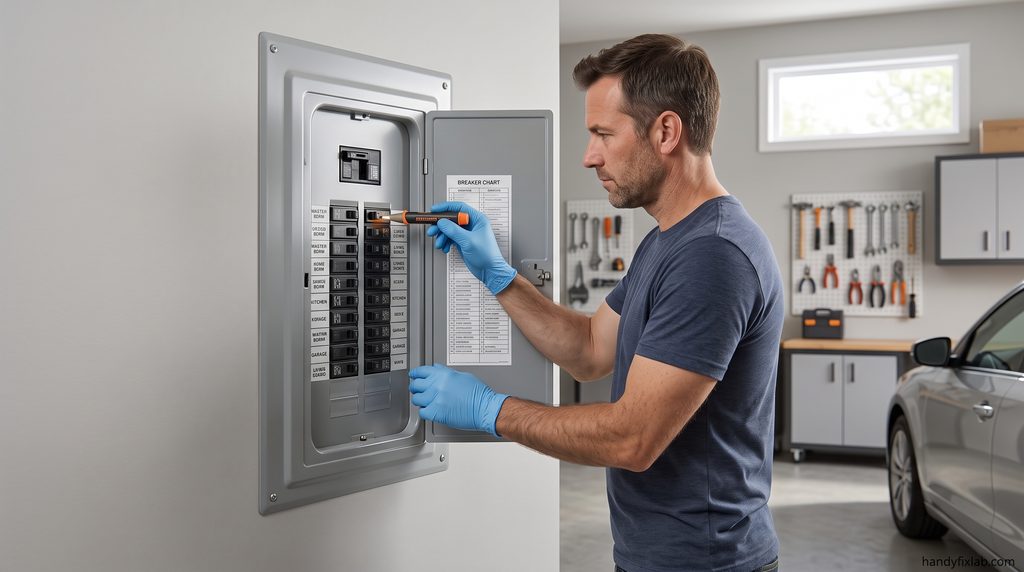
2. Check the Circuit Breaker
Go to your electrical panel and look for a breaker that may have tripped.
A tripped breaker may not always look completely different from the others. If you identify the correct breaker, move it fully to the OFF position and then back to ON.
Test the light switch again.
If the breaker trips again immediately when you turn the light on, do not keep resetting it. Repeated trips can indicate an electrical fault that needs professional attention.
3. Check Nearby GFCI Outlets
A GFCI outlet can sometimes interrupt power to other devices farther along the circuit. This can happen in areas such as kitchens, bathrooms, garages, basements, and outdoor spaces.
Look for nearby outlets with TEST and RESET buttons. If one has tripped, press RESET once and then test the light.
If the GFCI will not reset or immediately trips again, stop troubleshooting and have the circuit checked.
4. Check Whether Other Lights or Outlets Are Also Dead
Turn on other nearby lights and test nearby outlets.
If only one light is affected, the problem may be the bulb, fixture, switch, or a local connection.
If several lights or outlets stopped working at the same time, the problem may be farther upstream, such as a breaker, GFCI, or circuit connection.
This check can save you from replacing a perfectly good switch.
5. Inspect the Switch Only If It Is Safe
If your light switch is not working, inspect the switch only if it is safe to do so.
If the basic checks do not solve the problem, the switch itself may have failed.
Do not open the switch box while power is on. Turn off the appropriate breaker and use a suitable voltage tester to confirm that the circuit is not energized before touching electrical wiring.
If you are not comfortable identifying the correct breaker or testing for voltage, stop here and call a qualified electrician.
A worn switch may have loose connections or damaged internal contacts, but electrical wiring problems are not a good place to guess.
What If the Switch Is Hot, Buzzing, or Discolored?
Do not continue using a switch that feels unusually hot or shows signs of damage.
Other warning signs include:
- Burning or unusual odors
- Crackling or popping sounds
- Sparks
- Discoloration around the switch plate
- Flickering lights
- A loose switch that does not operate normally
- A breaker that repeatedly trips
These symptoms can indicate an electrical safety problem. The CPSC and Electrical Safety Foundation International both advise getting professional help when switches become hot or show signs such as sparks, odors, discoloration, or repeated breaker trips.
When to Call an Electrician
If you suspect a faulty light switch, avoid removing the switch or touching its wiring unless you are qualified to do electrical work safely.
Call a qualified electrician if:
- The breaker keeps tripping
- The GFCI repeatedly trips
- You see burned or damaged wiring
- The switch is hot, buzzing, or sparking
- You smell burning plastic
- You are unsure which breaker controls the switch
- The problem requires working inside the electrical box and you are not comfortable doing so
Electrical troubleshooting is not worth taking unnecessary risks with. A simple switch problem can sometimes be connected to a larger wiring issue.
A faulty light switch can sometimes be part of a larger electrical problem, so avoid taking the switch apart if you are unsure about the wiring.
Final Thoughts
When a light switch not working problem appears, start with the simplest possibilities: check the bulb, reset the breaker, check nearby GFCI outlets, and see whether other devices are also affected.
Only move toward inspecting the switch if you can safely turn off and verify the power. If you find heat, sparks, burning smells, damaged wiring, or repeated breaker trips, leave the repair to a qualified electrician.
A few simple checks can often identify the problem without unnecessary parts or complicated electrical work.
If you suspect a faulty light switch, do not attempt to replace it unless you are confident you can work safely with electrical wiring.