
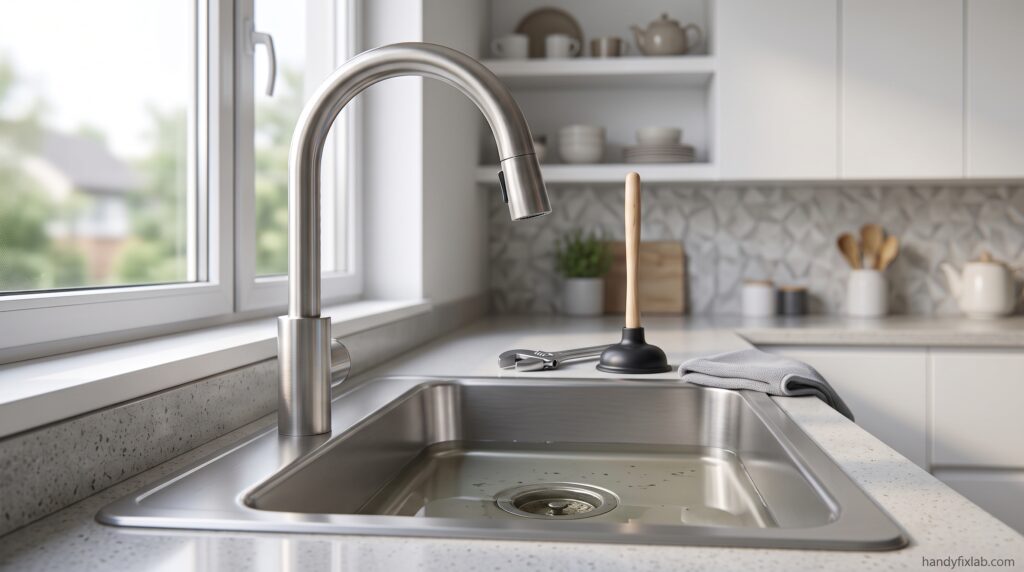
Unclog a sink drain without calling a plumber by starting with a few simple DIY methods. Many sink clogs are caused by hair, soap buildup, food particles, or grease and can often be cleared with basic tools.
Before you start, remove standing water if possible and wear rubber gloves. Start with the simplest method and move to the next one only if the clog remains.
Why Is My Sink Drain Clogged?
Sink drains can slow down or become completely blocked for several reasons. Bathroom sinks commonly collect hair, soap, and other buildup around the stopper or drain. Kitchen sinks can develop clogs from grease, food particles, and other debris.
If only one sink is clogged, the blockage may be relatively close to that drain. If several drains are backing up at the same time, the problem could be farther down the plumbing system and may require professional help.
What You Need
For most basic clogs, you may need:
- Rubber gloves
- Bucket
- Sponge or cloth
- Sink plunger
- Adjustable pliers
- Small cleaning brush
- Drain snake or drain stick, if necessary
Keep a bucket and some towels nearby because removing a drain trap can release dirty water.
How to Unclog a Sink Drain: 5 Easy Methods
1. Remove Visible Debris
Start by checking the drain opening and sink stopper.
Remove any visible hair, food particles, or other debris with gloved hands or a small cleaning tool. If your sink has a removable stopper or strainer, take it out and clean it thoroughly.
Sometimes the blockage is sitting right near the drain opening, so this simple step may be enough to restore normal drainage.
2. Try Hot Water
If the clog is caused by grease or light buildup, hot water may help loosen it.
Remove as much standing water as possible first. Then slowly pour very hot water—not necessarily boiling water—into the drain and check whether the water begins to flow.
Avoid using boiling water as a general solution, especially if you are unsure what type of pipes your home has. Very hot water can be unsuitable for some plastic plumbing systems.
3. Use a Sink Plunger
A sink plunger is one of the easiest tools to try when a drain is blocked.
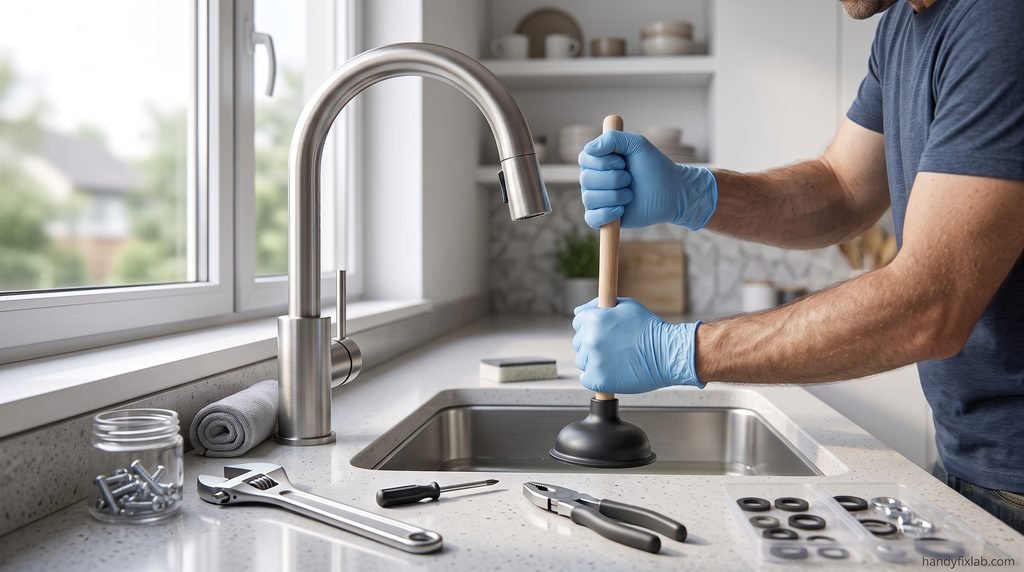
If there is not enough water in the sink to cover the plunger cup, add a small amount. Place the plunger directly over the drain and create a tight seal.
If your sink has an overflow opening, cover it with a wet cloth. For a double-basin sink, block the other drain as well.
Push the plunger up and down firmly several times while keeping the seal in place. Then remove it and check whether the water drains. Repeat if necessary.
A flat-bottom sink plunger is designed to create a good seal over sink drains.
For additional home-maintenance guidance, see the U.S. Department of Housing and Urban Development’s plumbing guide.
4. Clean the P-Trap
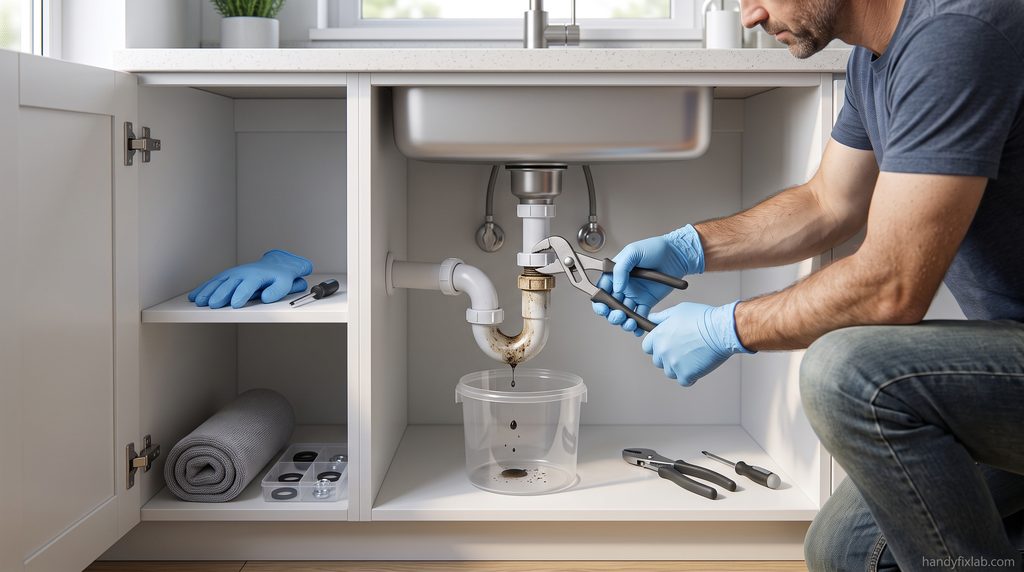
If your sink is still clogged, the blockage may be inside the P-trap—the curved section of pipe underneath the sink.
Place a bucket underneath the trap before loosening the connections. Water and debris trapped inside the pipe may drain into the bucket.
Carefully remove the P-trap, clean out the buildup, and check the pipe for damage or corrosion. Reinstall it securely and run water through the sink to check for leaks.
Do not overtighten plastic fittings because they can crack.
5. Try a Drain Snake
For a clog that is deeper in the pipe, a small drain snake or drain stick may help.
Insert the tool into the drain and slowly work it toward the blockage. Depending on the type of tool, you may be able to hook, break apart, or pull out the material causing the clog.
Work carefully and follow the tool manufacturer’s instructions. If you meet strong resistance or the clog does not clear, avoid forcing the tool farther into the pipe.
Never use a drain snake immediately after applying chemical drain cleaner. The tool can cause the chemical to splash back onto you.
What Not to Do When Unclogging a Sink
Avoid mixing different chemical drain cleaners or using multiple products together. Chemical drain cleaners can also create safety problems when you later work on the pipes.
If you have already used a chemical drain cleaner, do not immediately remove the P-trap or use a drain snake. Follow the product’s safety instructions and allow the situation to be handled safely.
For older or corroded plumbing, use extra caution because aggressive tools or chemicals may damage the pipes.
When to Call a Plumber for a Clogged Sink
If you cannot unclog a sink drain with these basic methods, the blockage may be deeper in the plumbing system.
- The sink remains completely blocked after several methods.
- Multiple drains in the home are backing up.
- Water comes back up through another drain.
- You find a leaking, cracked, or badly corroded pipe.
- The blockage keeps returning.
- You are not comfortable removing the P-trap or working with drain-cleaning tools.
A recurring or widespread blockage may indicate a problem deeper in the plumbing system rather than a simple sink clog.
Final Thoughts
Knowing how to unclog a sink drain can save you time and help you handle many common household blockages yourself. Start with visible debris, then try hot water, a sink plunger, the P-trap, and finally a drain snake if necessary.
Work from the simplest method to the more involved ones, and stop if the problem appears to be beyond a basic DIY repair.