
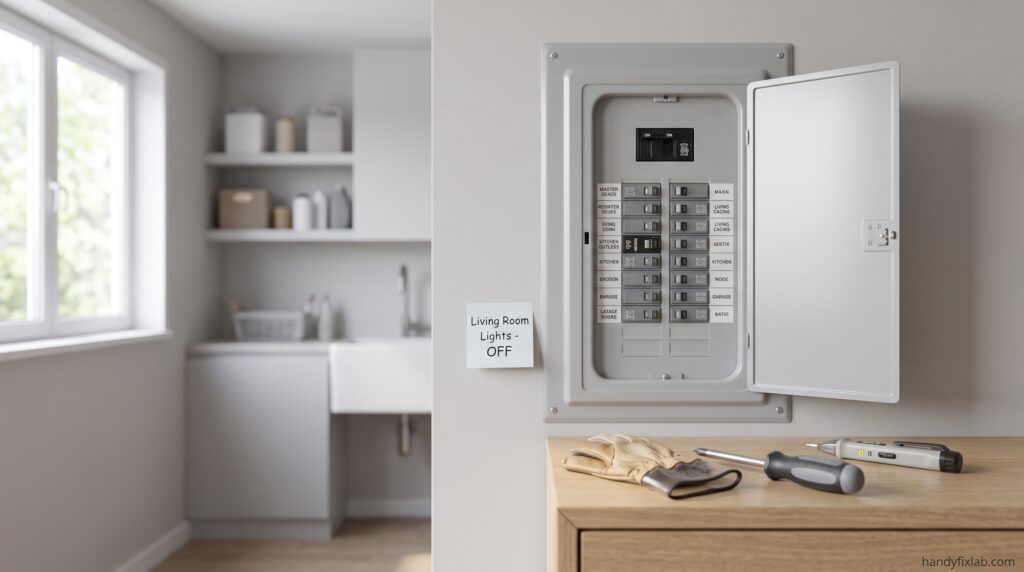
When a circuit breaker keeps tripping, something may be causing an overload, a faulty appliance, or another electrical problem. The breaker is designed to shut off power when it detects an unsafe condition.
If the breaker trips once, you may be able to reset it after removing the likely cause. But if it keeps tripping, do not repeatedly reset it without finding out why.
Why Does a Circuit Breaker Keep Tripping?
A breaker may trip for several reasons. The most common include too many appliances using the same circuit, a faulty appliance, a short circuit, or another wiring problem.
Frequent breaker trips are a warning sign that should not be ignored.
5 Safe Checks to Try
1. Check What Was Running
Think about what you were using when the breaker tripped.
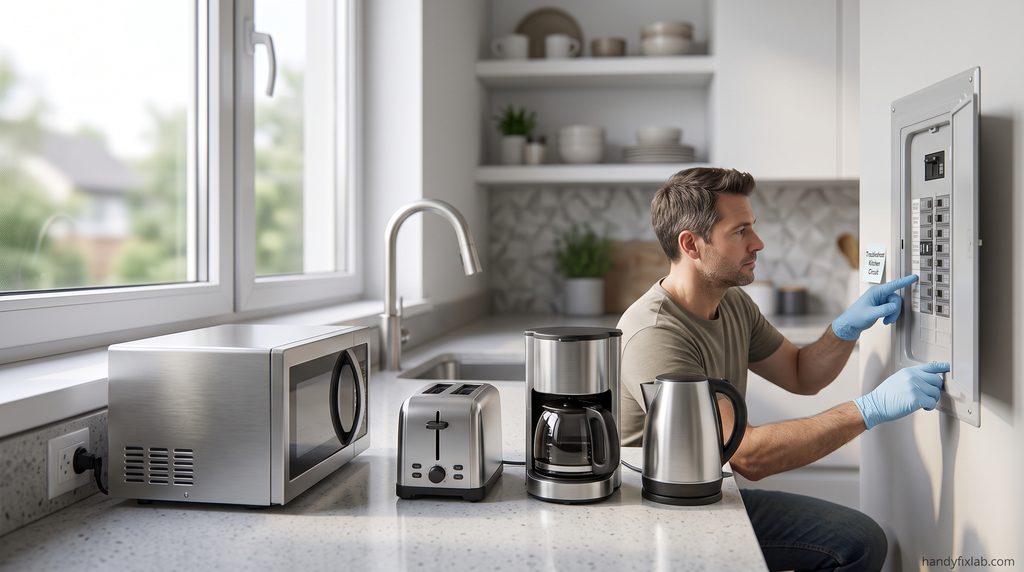
High-power appliances such as heaters, microwaves, hair dryers, air conditioners, and other demanding devices can place a heavy load on a circuit.
Turn off or unplug some appliances on the affected circuit. If several high-power devices were running at the same time, move one to a different circuit if appropriate.
Do not overload a circuit simply by moving multiple appliances to another outlet. The outlets may still be connected to the same circuit.
2. Reset the Circuit Breaker Correctly
Find your electrical panel and identify the breaker that has tripped. It may appear in the OFF position or sit between ON and OFF.
Before resetting it, turn off or unplug appliances connected to the affected circuit.
Move the breaker fully to OFF, then back to ON.
If power returns and the breaker stays on, the problem may have been a temporary overload. Electrical safety guidance recommends investigating why a breaker trips rather than simply resetting it repeatedly.
3. Check for a Problem Appliance
A faulty appliance can cause a breaker to trip.
If the breaker trips when you turn on or plug in one particular appliance, unplug that appliance and do not continue using it until it has been checked.
Look for damaged power cords, unusual smells, overheating, sparks, or other visible signs of damage.
An appliance that repeatedly trips a breaker may have a defect that creates a fire or shock hazard.
4. Look for Warning Signs
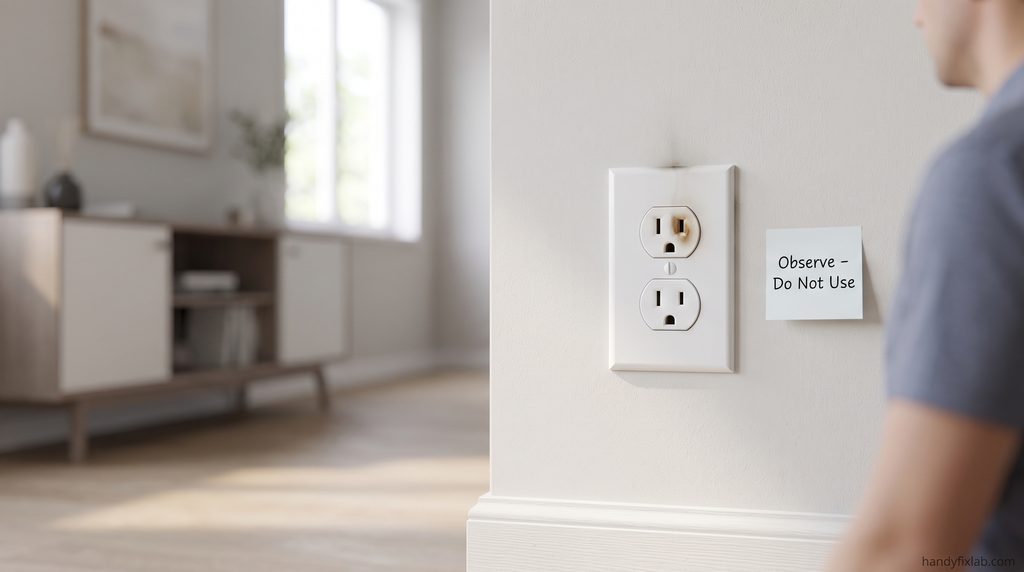
Before doing anything else, look around the affected area for signs of an electrical problem.
Stop troubleshooting if you notice:
- Burning smells
- Buzzing or crackling sounds
- Sparks
- Warm or discolored outlets or switches
- Flickering or dimming lights
- Damaged electrical cords
- A mild shock or tingling sensation
These can indicate an overload, damaged wiring, or another electrical fault.
If you notice any of these signs, leave the electrical system alone and contact a qualified electrician.
5. Check Whether the Breaker Trips Again
After removing obvious loads and safely resetting the breaker, pay attention to what happens next.
If the circuit breaker keeps tripping even when you are not using several high-power appliances, there may be a deeper electrical problem.
Do not remove the electrical panel cover or attempt to repair internal wiring yourself. A qualified electrician can inspect the circuit and determine whether the problem involves the wiring, breaker, or another component.
What If the Breaker Trips Immediately?
If the breaker trips immediately after you reset it, stop resetting it repeatedly.
An immediate trip can indicate that the underlying problem has not been corrected. The safest next step is to leave the circuit off and have a qualified electrician investigate the problem.
Never replace a circuit breaker with one that has a higher rating just to prevent it from tripping. The breaker must match the circuit’s design and wiring.
If your circuit breaker keeps tripping after you remove the obvious load, stop resetting it and have the circuit checked by a qualified electrician.
When to Call an Electrician
Call a qualified electrician if:
- The breaker keeps tripping.
- It trips immediately after being reset.
- You cannot identify what caused the problem.
- You smell burning or see scorch marks.
- An outlet or switch feels hot.
- You hear buzzing or crackling.
- You see damaged wiring.
- Multiple electrical circuits are having problems.
Electrical warning signs such as frequent breaker trips, buzzing, discoloration, or burning odors should be professionally inspected.
Final Thoughts
Knowing what to do when a circuit breaker keeps tripping can help you identify a simple overload without taking unnecessary risks. Start by checking what was running, reduce the load, and reset the breaker correctly once.
If the breaker trips again or you notice any warning signs, stop troubleshooting and call a qualified electrician. A circuit breaker is a safety device, so repeated trips should be treated as a warning rather than an inconvenience.