
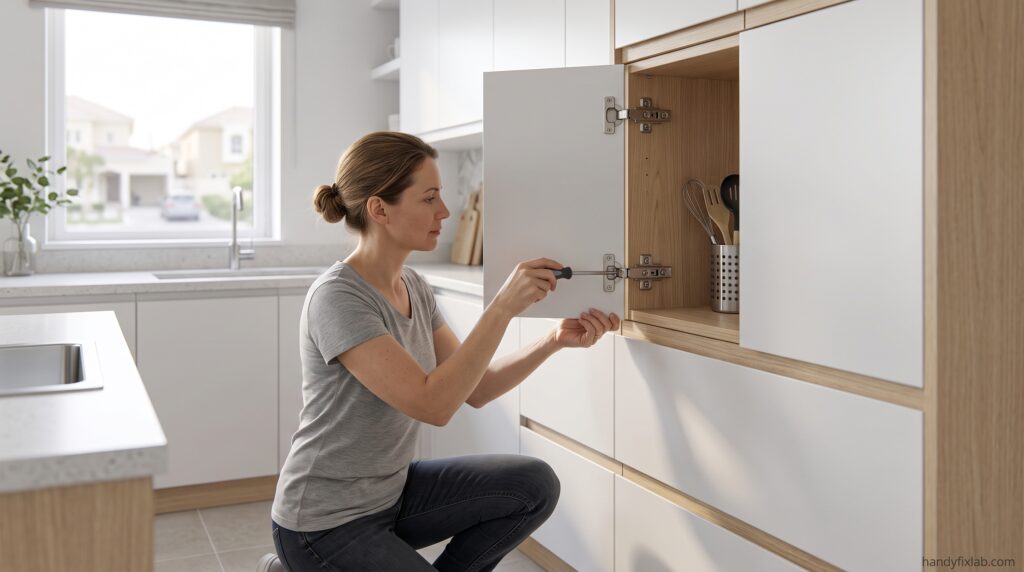
Fix a loose cabinet door by starting with the hinges, since loose screws and poor alignment are common causes of cabinet door problems.
A loose cabinet door can make a kitchen or bathroom look worn out, but the problem is often easier to fix than it seems. In many cases, loose screws, misaligned hinges, or worn screw holes are responsible.
The good news is that you can usually fix a loose cabinet door with a screwdriver and a few simple adjustments. Here are five easy steps to get the door working properly again.
Why Is My Cabinet Door Loose?
A cabinet door can become loose for several reasons:
- Hinge screws have loosened over time
- The hinges are out of alignment
- A hinge is damaged or bent
- The wood around a screw hole has become worn
- The cabinet door has shifted slightly from repeated use
Start by opening and closing the door slowly. Watch the hinges and check whether the door moves, sags, or sits unevenly.
What You Need
For most cabinet door repairs, you may only need:
- Phillips or flat-head screwdriver
- Small drill, if a screw hole needs repair
- Wood glue
- Wooden toothpicks or small wood pieces
- Clean cloth
If you need additional basic repair tools, see our [Tools] category for useful equipment for common home projects.
How to Fix a Loose Cabinet Door: 5 Easy Steps
1. Tighten the Hinge Screws
Open the cabinet door and inspect each hinge screw.
Use the correct screwdriver to tighten loose screws gently. Do not overtighten them, because excessive force can damage the wood or strip the screw head.
After tightening, open and close the door to see whether the problem is solved.
2. Check the Hinge Alignment
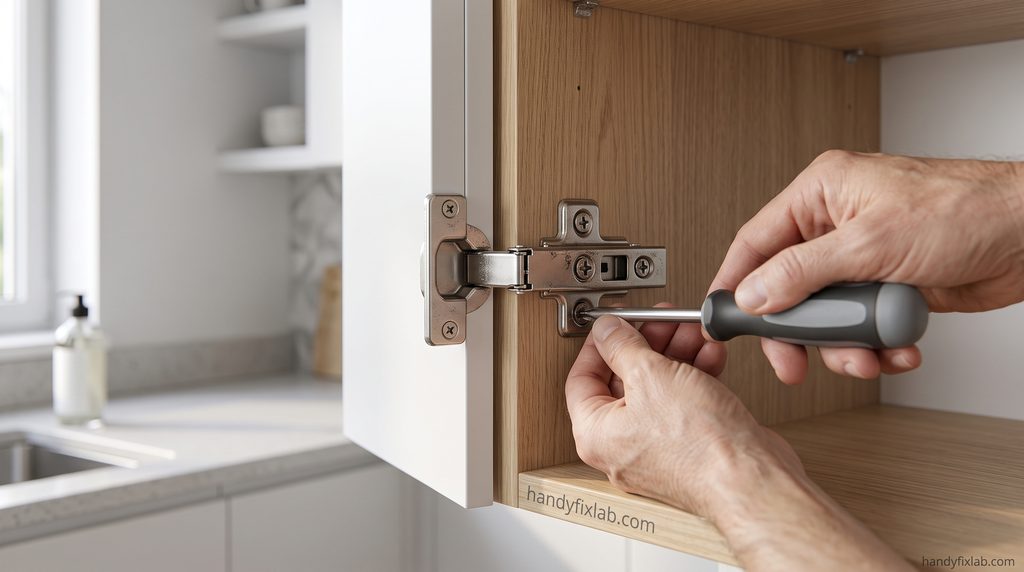
If the screws are tight but the door still looks uneven, the hinge may need adjustment.
Many modern cabinet hinges have adjustment screws that allow you to move the door slightly from side to side, forward and backward, or up and down. A home maintenance guide from the Interior Regional Housing Authority also recommends checking and adjusting cabinet hinges when a door is misaligned.
Make small adjustments rather than turning the screws too far at once. Close the door after each adjustment and check the gaps around the edges.
3. Check for a Damaged Hinge
If tightening and adjusting the hinge does not help, inspect the hinge itself.
Look for:
- Bent metal
- Cracks
- Loose hinge plates
- Screws that will not stay tight
- A hinge that does not move smoothly
A damaged hinge is usually better replaced than forced back into position. Take the old hinge with you when buying a replacement so you can match the size and mounting style.
4. Repair a Worn Screw Hole
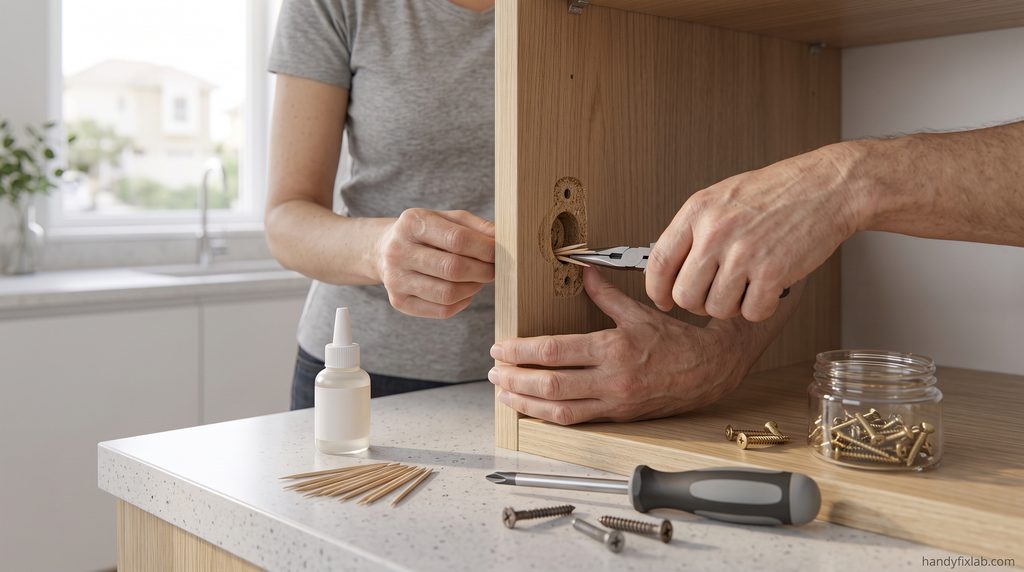
Sometimes a screw keeps spinning without becoming tight. This usually means the wood around the screw hole has lost its grip.
For a small repair, remove the screw and place a small amount of wood glue around several wooden toothpicks. Insert them into the worn hole and allow the glue to dry completely.
Trim the excess material, then make a small pilot hole before reinstalling the screw.
This gives the screw fresh material to grip instead of repeatedly tightening it into the same damaged hole.
5. Test and Fine-Tune the Door
Once the screws and hinges are secure, slowly open and close the cabinet door several times.
Check that:
- The door closes without rubbing
- The gaps around the door look reasonably even
- The hinges remain secure
- The door does not sag
- The cabinet door opens and closes smoothly
If everything looks good, the repair is complete.
What Not to Do
Avoid forcing the cabinet door into position or overtightening every screw you see. This can damage the hinge, strip the screw, or weaken the cabinet material.
Also, if the cabinet is wall-mounted and appears loose from the wall rather than simply having a loose door, stop using it until its mounting is checked. A cabinet that is pulling away from the wall may require a more substantial repair.
When to Call a Professional
A simple loose door is usually a manageable DIY repair. However, consider professional help if:
- The cabinet itself is pulling away from the wall
- The cabinet frame is badly damaged
- The wood is severely split or swollen
- Multiple mounting points have failed
- The door or cabinet has significant structural damage
For renters, check your lease before making permanent cabinet repairs.
Final Thoughts
With a few basic tools and careful adjustments, you can usually fix a loose cabinet door without replacing the entire cabinet.
A loose cabinet door does not always mean you need a new cabinet. In many cases, tightening the hinges, adjusting their position, or repairing a worn screw hole is enough to restore the door.
Take your time, make small adjustments, and test the door after each change. With a few basic tools, you can often fix a loose cabinet door without replacing the entire cabinet.