
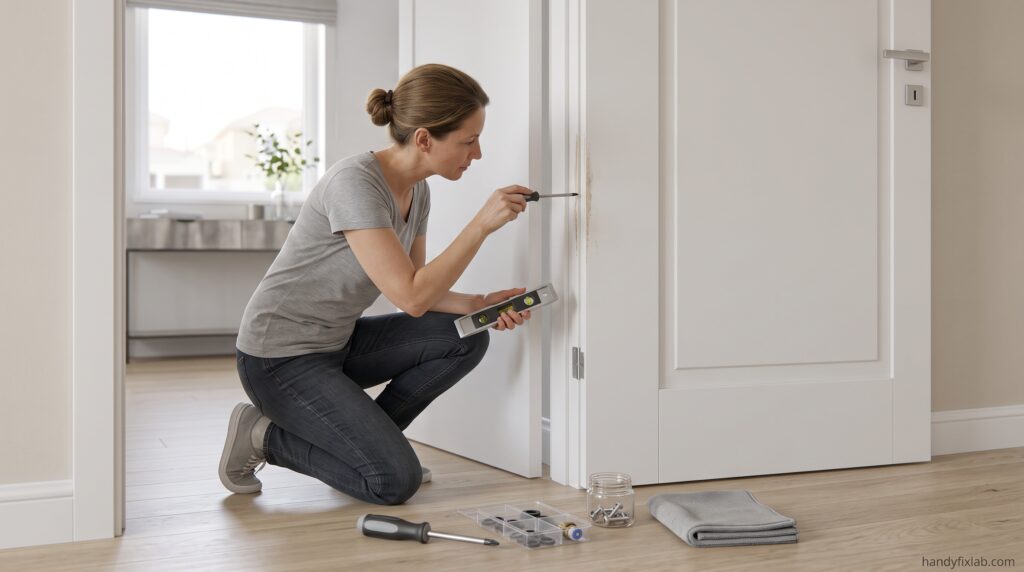
A door that sticks can be annoying every time you open or close it. The good news is that you often do not need to replace the door or call a professional.
In many cases, the problem comes from loose hinges, poor alignment, or a small area of the door rubbing against the frame.
This guide shows you how to fix a sticking door with five simple DIY fixes.
How to Fix a Sticking Door: Find the Cause
A door can start sticking for several reasons. Common causes include:
- Loose or worn hinge screws
- A sagging door
- Changes in humidity that cause wood to expand
- A door frame that is slightly out of alignment
- Paint buildup around the door or frame
- A small section of the door rubbing against the frame
Before removing any wood, find exactly where the door is rubbing. This can help you fix the real problem instead of making unnecessary changes.
What You Need
For most sticking-door repairs, you may need:
- Screwdriver
- Pencil
- Sandpaper
- Small level
- Utility knife
- Wood filler or longer screws if a hinge screw hole is damaged
1. Find Where the Door Is Rubbing
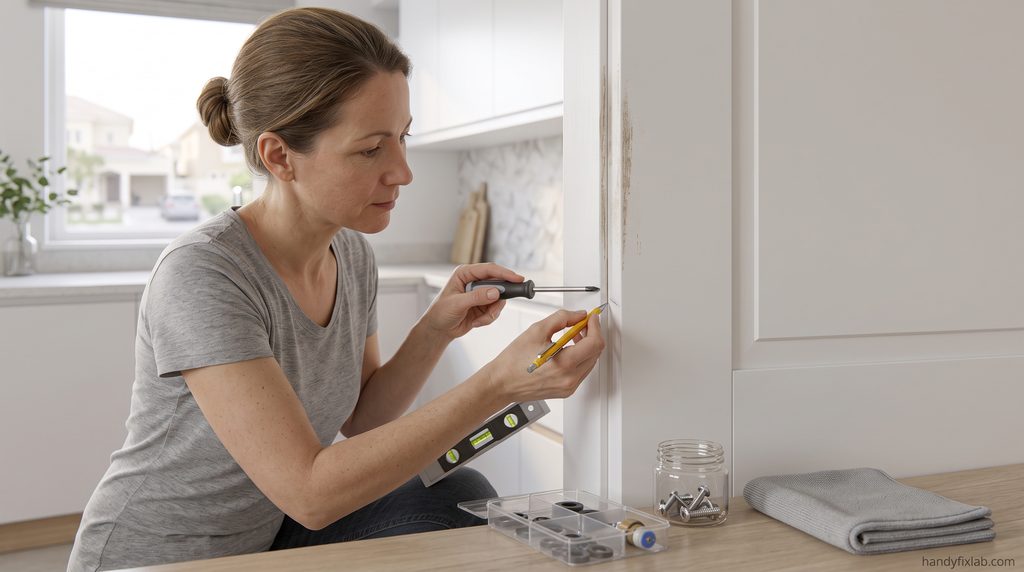
Finding the rubbing point is the first step to fix a sticking door without removing unnecessary material.
Close the door slowly and look around the edges.
Pay attention to where the gap becomes smaller or where the door feels tight. You can also run a pencil lightly along the edge of the door where you suspect it is rubbing.
Open and close the door again to see exactly where the contact occurs.This is an important first step when you want to fix a sticking door without removing unnecessary material.
Tip: Do not start sanding yet. First determine whether the problem is caused by the hinges or alignment.
2. Tighten the Hinge Screws
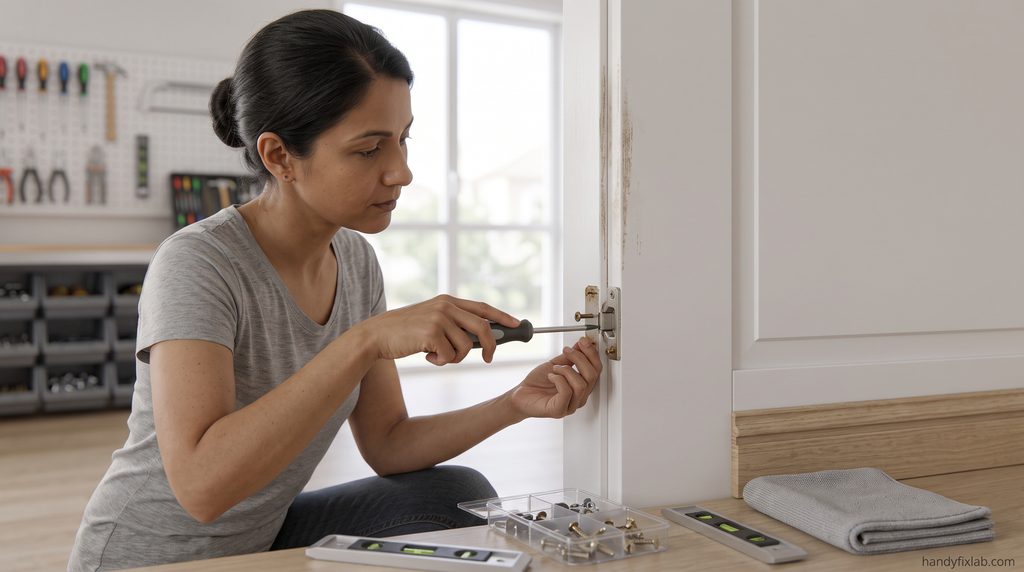
Loose hinges are one of the easiest things to check.
Open the door and inspect each hinge. Use a screwdriver to tighten any loose screws, but avoid overtightening them.
Start with the screws holding the hinges to the door frame. Then check the screws attached to the door.
After tightening them, close and open the door several times.
If the door was sagging because of loose hinges, this simple fix may solve the problem without any sanding.
3. Check for a Loose or Sagging Hinge
If tightening the screws does not solve the problem, look closely at the hinges.
A hinge may be pulling away from the frame, or one of the screw holes may no longer hold the screw securely.If you also notice noise from the hinges, see our guide on fixing a squeaky door hinge.
For a loose screw hole, remove the screw and inspect the hole. A damaged hole may need to be repaired with wood filler or another suitable wood-repair method before the hinge is secured again.
Once the hinge is firmly attached, test the door again.
4. Check the Strike Plate and Door Alignment
Sometimes the door itself is fine, but the latch does not line up correctly with the strike plate.
Close the door slowly and watch the latch as it approaches the plate.
If the latch hits the edge of the strike plate or the door needs to be pushed or lifted to close properly, the alignment may need adjustment.
Loosen the strike plate screws slightly and make a small adjustment if necessary. Tighten the screws again and test the door.
Make small adjustments rather than moving the plate too far at once.
5. Sand the Rubbing Area if Needed
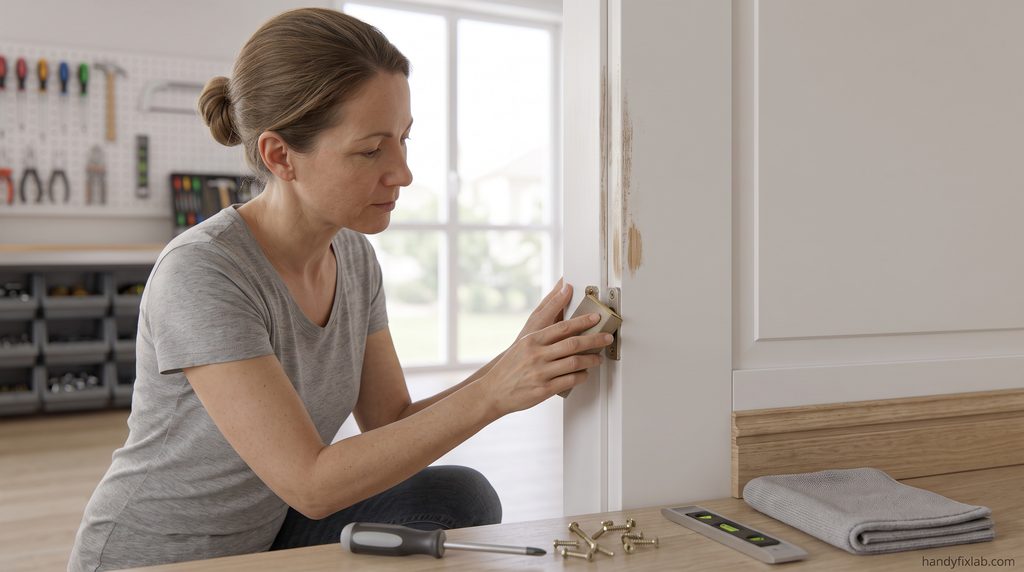
If the hinges and alignment are fine but the wood is still rubbing against the frame, lightly sand the problem area.
Mark the rubbing section and remove only a small amount of material at a time.
Use medium-grit sandpaper and check the door frequently. You want to remove just enough material for the door to open and close smoothly.
After sanding, smooth the area with finer sandpaper if needed. If the exposed wood is in an area that can absorb moisture, consider sealing or repainting it.
When Should You Call a Professional?
A sticking door is usually a simple repair, but some problems need more attention.
Consider calling a professional if:
- The door frame appears seriously damaged
- The door has shifted significantly
- You see cracks around the frame
- The door will not close or latch safely
- The problem returns quickly after repeated repairs
A professional can determine whether the problem involves the frame, structural movement, or another issue that is not suitable for a simple DIY fix.
Final Thoughts
Learning how to fix a sticking door starts with finding the exact rubbing point.
Check the hinges first, then inspect the alignment and strike plate. Only sand the door if the simpler adjustments do not solve the problem.
Having the right tools can also make simple door repairs easier.
Taking a few minutes to find the cause can save you from removing more wood than necessary—and can help your door open and close smoothly again.
This is one of the common home repair problems you can handle with basic tools.