
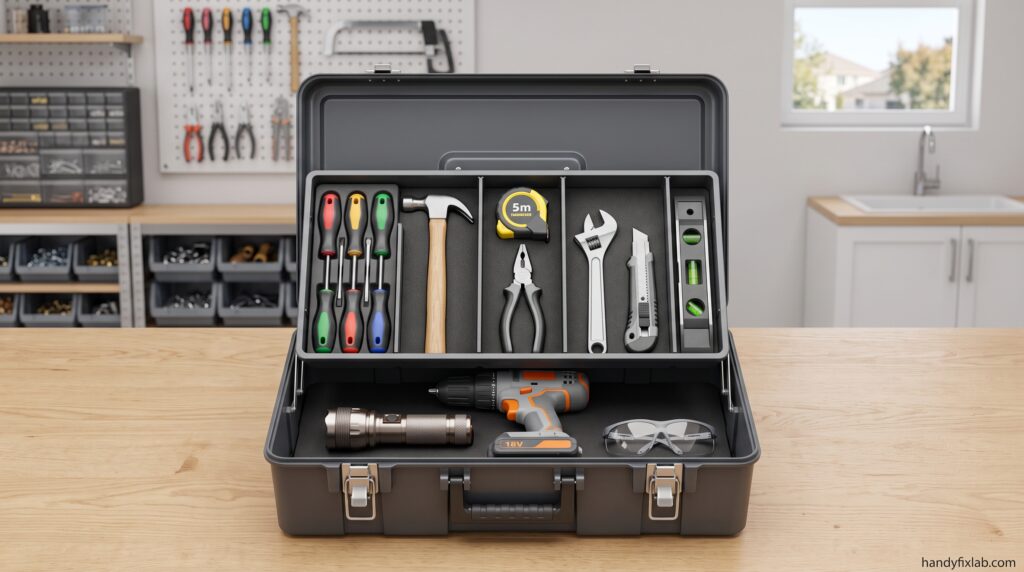
You do not need a garage full of equipment to handle common household repairs. A small collection of basic home repair tools can help you tighten loose screws, hang pictures, assemble furniture, make simple adjustments, and handle everyday maintenance.
If you are building your first toolbox, start with versatile tools that you are likely to use regularly.
1. Screwdriver Set
A good screwdriver set is one of the first things to add to your toolbox. Phillips and flat-head screwdrivers cover many everyday jobs, from tightening cabinet hardware to replacing switch plates and assembling furniture.
Choose several common sizes rather than buying a large set with tools you rarely use.
2. Claw Hammer
A standard claw hammer is useful for driving and removing nails, assembling simple projects, and handling small repairs around the house.
Look for a comfortable grip and a balanced design. The claw on the back is useful when you need to remove nails or small fasteners.
3. Tape Measure
A tape measure helps you avoid one of the most common DIY mistakes: guessing measurements.
Use it before buying replacement parts, hanging shelves, installing hardware, or checking whether furniture will fit in a particular space.
A locking tape measure that is easy to read is a practical choice for everyday home projects.
4. Pliers
Pliers give you a strong grip when your fingers cannot. They can help hold, bend, pull, or turn small objects.
A pair of combination or slip-joint pliers is a useful starting point. Long-nose pliers can be added later for jobs that require access to smaller spaces.
5. Adjustable Wrench
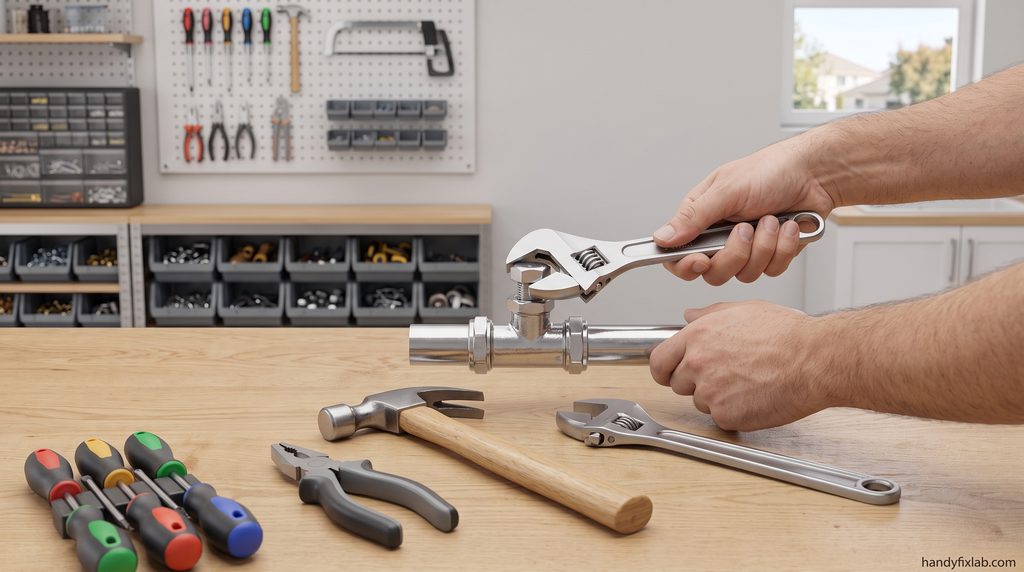
An adjustable wrench is useful for tightening or loosening nuts and bolts in many household repairs.
It is particularly handy for simple plumbing tasks, furniture assembly, and general maintenance. Adjust the jaws so they fit the fastener securely before applying force.
6. Utility Knife
A utility knife is useful for opening packages, cutting cardboard, trimming materials, and handling many small household tasks.
Always keep the blade under control and retract or cover it when the tool is not being used. Replace dull blades instead of forcing them through tough material.
7. Level
A small level helps you make sure shelves, pictures, frames, and other items are straight.
It can save time because something that looks straight by eye may actually be slightly tilted. For many simple home projects, a compact level is all you need.
8. Cordless Drill and Bits
A cordless drill can make drilling holes and driving screws much faster than using a hand screwdriver.
For basic household projects, choose a drill with adjustable speed and a selection of suitable bits. Different materials require different bits, so use the correct type for wood, metal, or masonry.
If you are new to power tools, start with simple projects and read the manufacturer’s instructions before use.
9. Flashlight
A flashlight may not look like a traditional repair tool, but it can be extremely useful.
It helps you see behind appliances, under sinks, inside cabinets, and in other poorly lit areas. A rechargeable flashlight or compact LED model can easily stay in your toolbox.
10. Safety Glasses
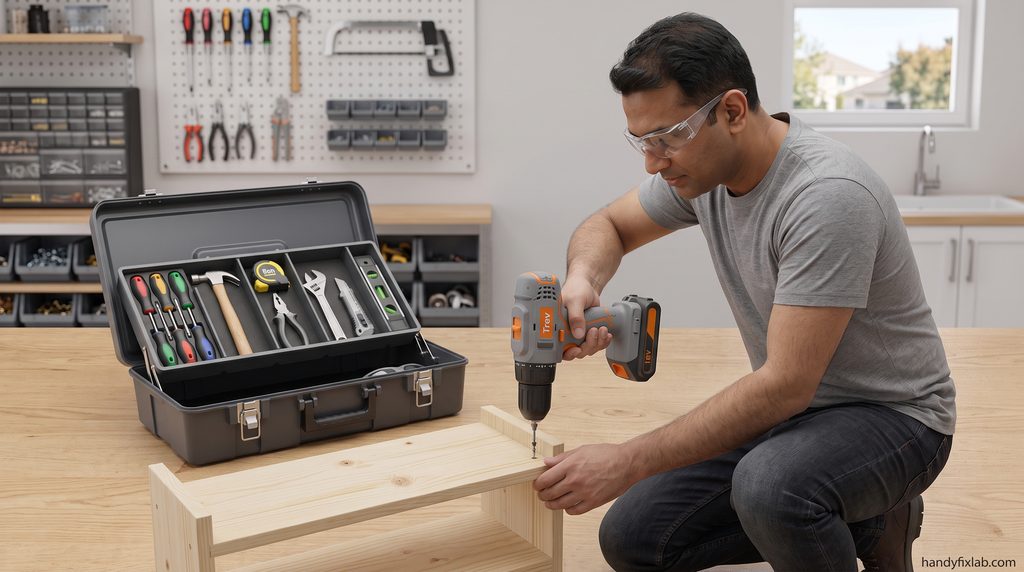
Safety glasses are an important addition to your toolbox, especially when drilling, cutting, sanding, or using power tools.
The U.S. Consumer Product Safety Commission recommends using eye protection when working with power tools because flying debris can cause eye injuries.
Keep your safety glasses with your tools so they are ready whenever a project requires them.
How to Choose Basic Home Repair Tools on a Budget
You do not need to buy all 10 basic home repair tools at once. Start with the tools you are most likely to use:
- Screwdriver set
- Hammer
- Tape measure
- Pliers
- Adjustable wrench
Then add a utility knife, level, flashlight, drill, and safety glasses as your projects become more demanding.
Buying versatile tools first helps keep your toolbox useful without filling it with equipment you rarely need.
Basic Tool Safety
Before using any tool, make sure it is suitable for the job and in good condition. For power tools, follow the manufacturer’s instructions, keep your hands away from moving parts, and use appropriate eye protection.
Never use a damaged tool simply because it is convenient. Replace tools with broken handles, damaged cords, or other defects.
Final Thoughts
A few reliable basic home repair tools can handle many of the small repairs and maintenance tasks that come up around the house.
A well-organized toolbox does not need to be large. A few reliable basic home repair tools can handle many of the small repairs and maintenance tasks that come up around the house.
Start with versatile hand tools, learn how to use them safely, and add specialized equipment only when a project actually requires it.