
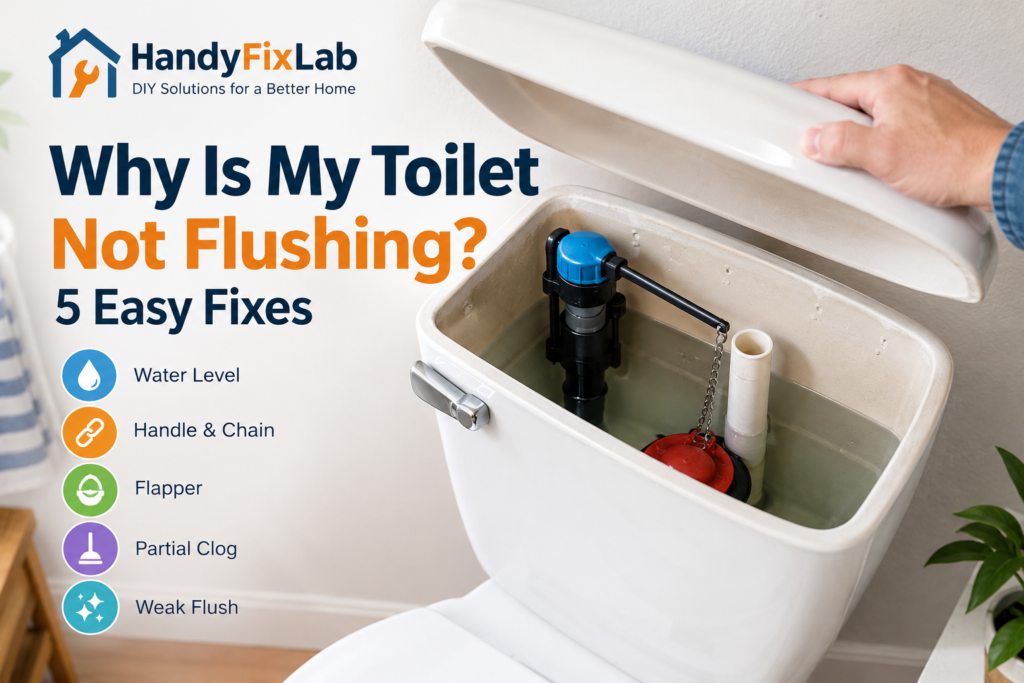
Is your toilet not flushing? Before calling a plumber, check these five common problems. A toilet that suddenly stops flushing can be frustrating, but the problem is often easier to fix than it looks. In many cases, the cause is inside the tank: the water level may be too low, the chain may be loose, or the flapper may not be opening correctly.
Before calling a plumber, try these five simple checks.
1. Check the Water Level in the Tank
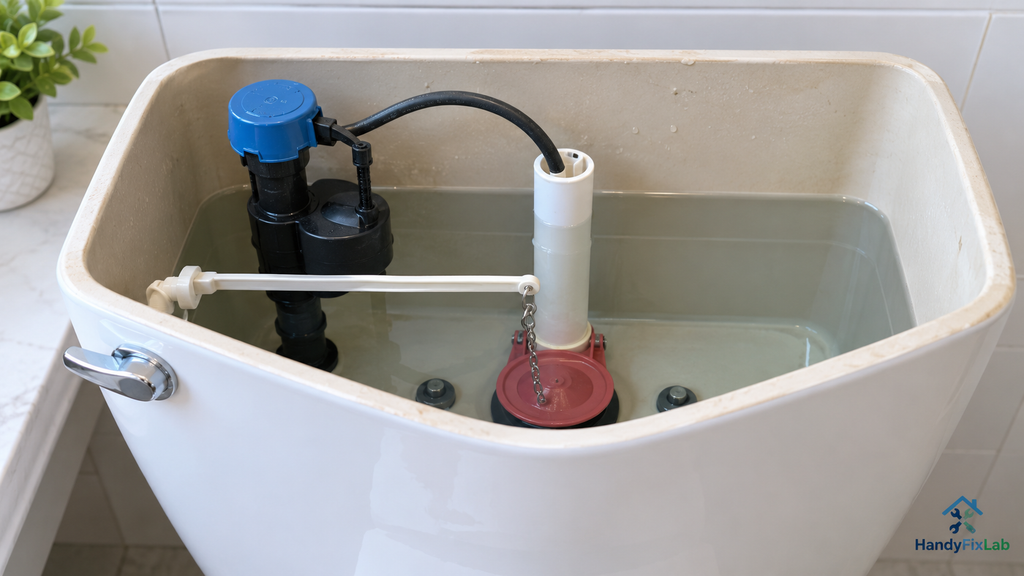
Start by removing the toilet tank lid and looking inside.
The tank should have enough water for a proper flush. If the water level is noticeably low, the toilet may not have enough water to flush waste completely.
Look for the water line marked inside the tank. On many toilets, the water should sit around the manufacturer’s marked level or below the top of the overflow tube.
If the tank is not filling properly, check the fill valve and float. Make sure the float can move freely and is not hitting the side of the tank.
If the toilet continues to have a low water level, the fill valve may need adjustment or replacement.
2. Check the Flush Handle and Chain
Press the handle while looking inside the tank.
Does the handle move but the flapper barely lifts?
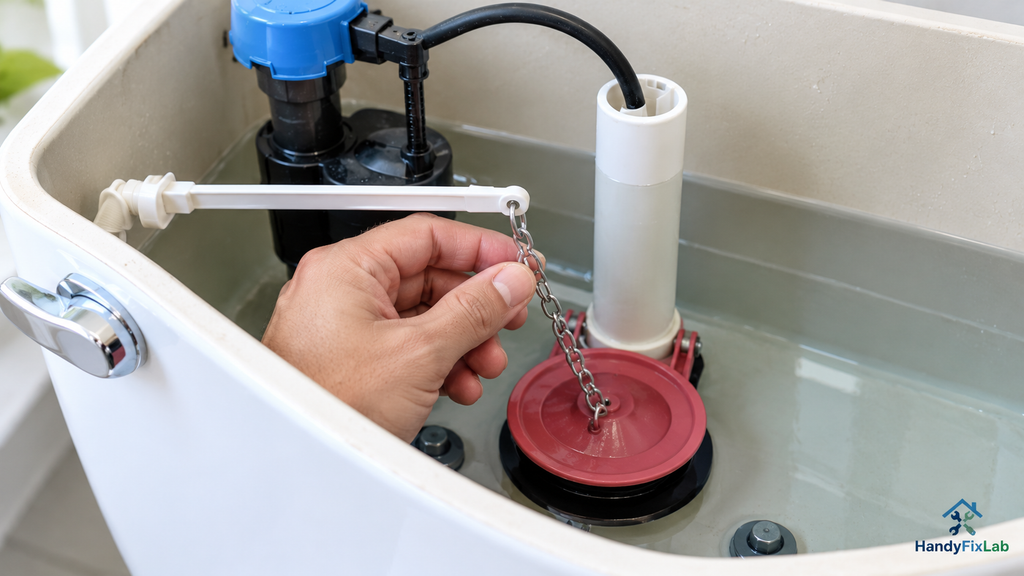
The small chain connecting the flush handle arm to the flapper may be too loose, disconnected, or tangled.
If the chain has come loose, reconnect it to the handle arm. If it has too much slack, move the chain to another hole on the handle arm so the flapper lifts properly when you press the handle.
The chain should have a little slack when the toilet is not being flushed. It should not be so loose that the handle moves without lifting the flapper.
3. Check the Toilet Flapper
The flapper is the rubber valve at the bottom of the toilet tank. It lifts when you flush and allows water to flow into the bowl.
Press the handle and watch the flapper.
If it does not lift high enough, check the chain and handle connection. If the flapper looks damaged, warped, or worn, it may need to be replaced.
A worn flapper can also cause a toilet to run between flushes. The EPA WaterSense program recommends checking toilet flappers regularly because worn flappers can cause leaks.
If your toilet is also running continuously, see our guide on How to Fix a Running Toilet.
4. Check for a Partial Clog
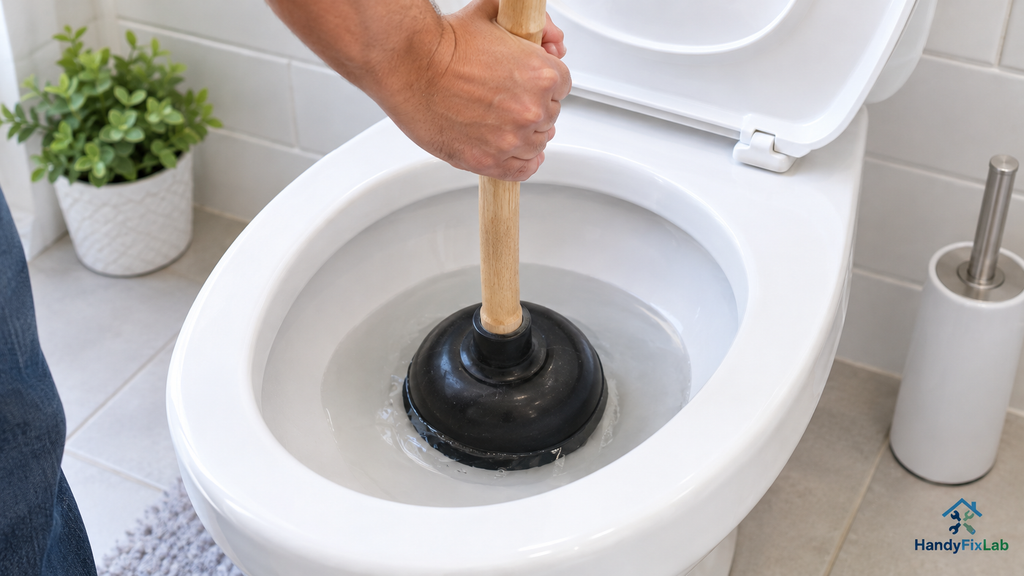
If the tank empties normally but the water in the bowl rises slowly or does not clear properly, you may have a partial clog.
A toilet plunger is usually the first tool to try.
Make sure there is enough water in the bowl to cover the rubber part of the plunger. Place the plunger firmly over the drain opening and push down gently at first. Then use several firm strokes to create pressure in the drain.
Flush the toilet only after the water level has returned to normal.
If plunging does not solve the problem and the toilet repeatedly backs up, a deeper blockage may require a toilet auger or professional help.
5. Check for a Weak Flush
Sometimes the toilet does flush, but the flush is too weak to clear the bowl.
Start by checking the tank water level, chain, and flapper as described above.
If those parts work correctly, mineral buildup around the toilet’s flush openings may reduce the amount of water entering the bowl. Cleaning may help, but avoid using harsh chemicals that could damage toilet components.
If you regularly need to flush twice, the problem may be more than a simple adjustment.
When Should You Call a Plumber for a Toilet Not Flushing Problem?
A toilet not flushing problem is often caused by a simple issue with the tank, flapper, chain, or a partial clog. Some toilet problems are better left to a professional.
Call a plumber if:
- The toilet keeps overflowing.
- Water is leaking onto the floor.
- The toilet remains blocked after plunging.
- You suspect a problem deeper in the drain line.
- The tank or toilet bowl is cracked.
- You have tried the basic fixes but the toilet still will not flush.
Final Check
When a toilet is not flushing, start with the simple things: water level, handle, chain, and flapper. If the tank works normally but the bowl does not clear, check for a clog.
Most of these checks take only a few minutes and can help you find the problem before spending money on a repair.
A toilet not flushing properly may have a problem with the tank, flapper, or drain.