
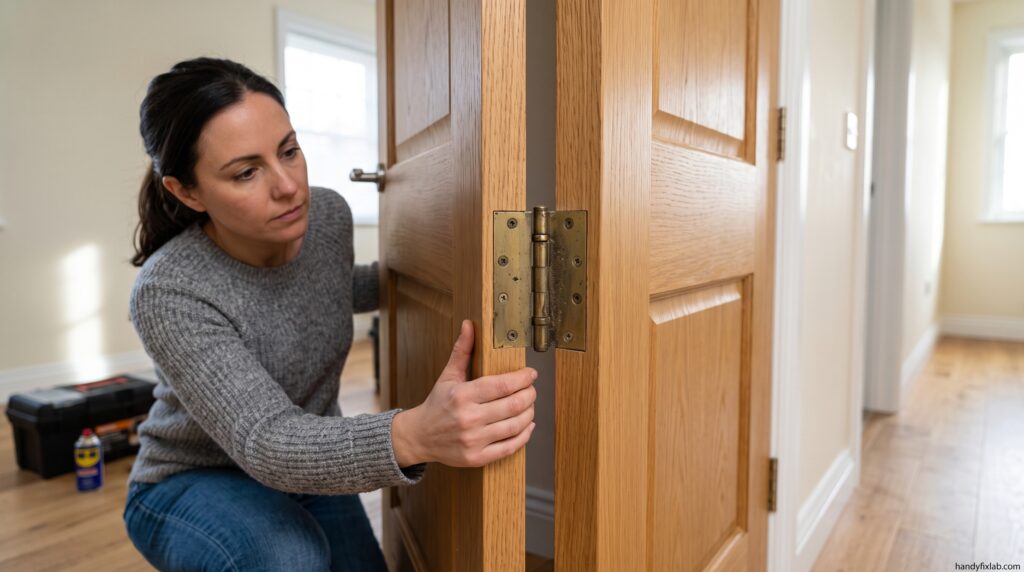
Why door hinges squeak? In most cases, the noise comes from friction between moving metal parts inside the hinge. A dry hinge, dirt buildup, loose screws, poor alignment, or worn hardware can all make a door squeak when it opens or closes.
The good news is that a squeaky hinge is usually easy to inspect. Before replacing anything, it helps to find out where the noise is coming from and what may be causing it.
If you are wondering why door hinges squeak, the cause is usually simple to identify and fix.
Why Door Hinges Squeak
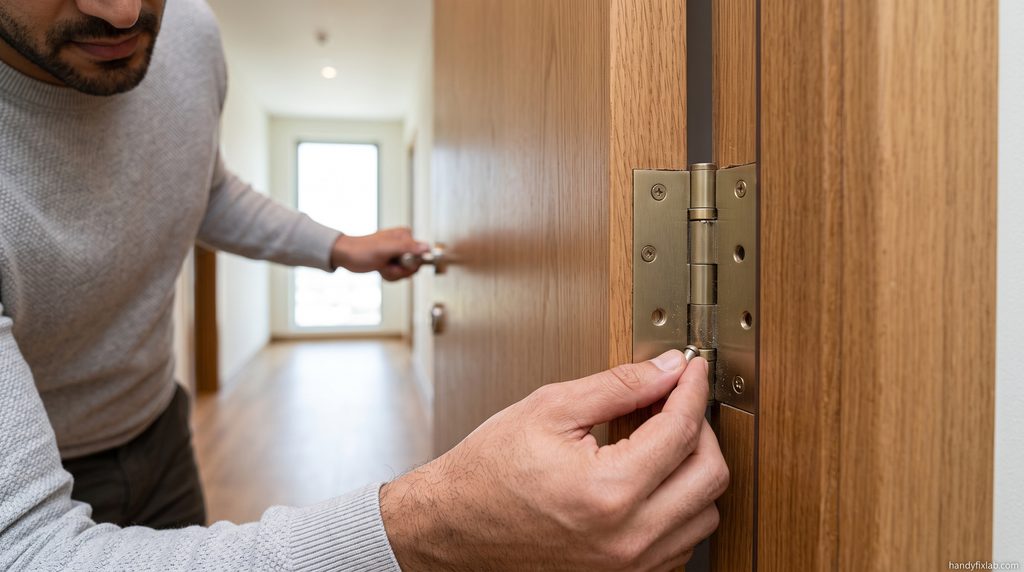
Door hinges have moving metal parts that allow the door to swing. Over time, lubrication can wear away, allowing more friction between the hinge pin and the surrounding metal.
Dirt and dust can also collect around the hinge. If the hinge screws become loose or the door moves out of alignment, the extra movement can increase friction and create a squeaking or creaking sound.
Sometimes, however, the hinge is not the real source of the noise. A door that rubs against the frame can make a similar sound, so checking the source first can save you from making an unnecessary repair.
5 Common Causes of Squeaky Door Hinges
1. The Hinge Is Dry
A dry hinge is one of the most common reasons for door hinge squeaking.
Every time the door moves, the hinge pin rotates inside the hinge. When there is not enough lubrication, the metal surfaces can rub against each other and produce a high-pitched squeak.
A small amount of suitable lubricant may be enough to solve a minor problem.
2. Dirt and Dust Have Built Up
Dust, dirt, and old lubricant can collect around the moving parts of a hinge.
This buildup can increase friction and prevent the hinge from moving smoothly. Before adding more lubricant, wipe away visible dirt and residue with a clean cloth.
Keeping the hinge clean can also help prevent the problem from returning.
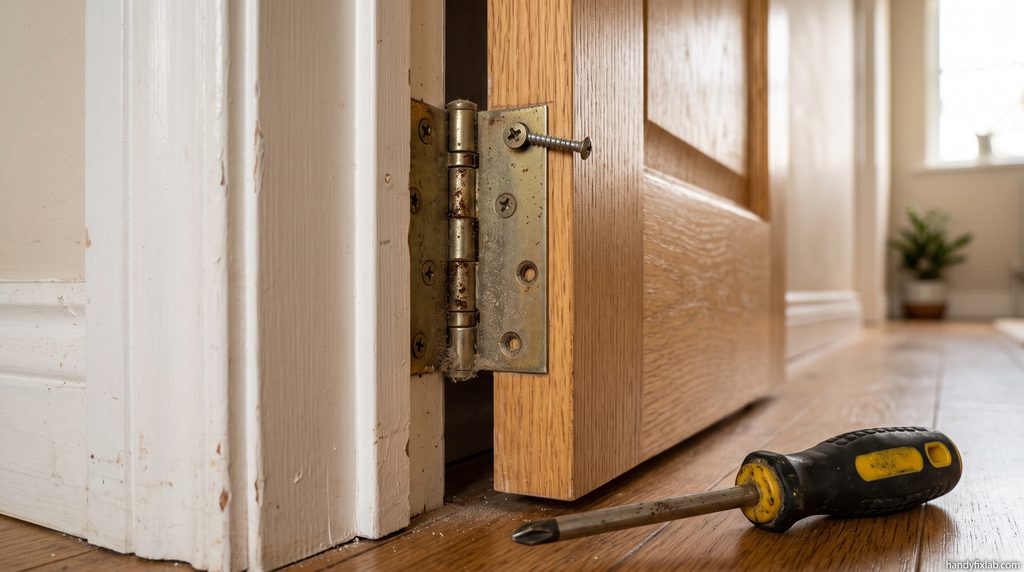
3. The Hinge Screws Are Loose
Loose screws can allow a hinge to move slightly as the door opens and closes.
Check the screws on both the door side and the frame side of the hinge. If one is loose, tighten it carefully with the correct screwdriver.
Do not overtighten the screw. If it spins without becoming tight, the screw hole may be damaged and require a separate repair.
4. The Door or Hinge Is Misaligned
A door that has shifted over time may put uneven pressure on its hinges.
Look at the gap between the door and the frame when the door is closed. If the gap is uneven, or the door rubs against the frame, the problem may involve alignment rather than lubrication alone.
A misaligned hinge can also cause the squeak to return shortly after lubrication because the underlying pressure has not been corrected.
5. The Hinge Is Rusty or Worn
Rust, corrosion, or worn metal surfaces can make a hinge rough and noisy.
Inspect the hinge for visible rust, damage, excessive movement, or metal dust. If the hinge is badly damaged or continues making noise after cleaning and lubrication, replacing it may be more practical than repeatedly treating the squeak.
How to Find the Source of the Squeak
Before trying a repair, slowly open and close the door.
Listen carefully near the top, middle, and bottom hinges. Try moving the door through different parts of its swing and notice when the sound occurs.
If the noise appears to come from the hinge throughout the door’s movement, the hinge is a likely source.
If the sound only happens when the door reaches a particular position, check whether the edge of the door is rubbing against the frame, trim, or another surface.
This simple check can help you avoid lubricating the wrong part.
How to Stop Door Hinges From Squeaking
Once you identify the noisy hinge, start with the simplest checks:
- Check the hinge screws and tighten any that are loose.
- Wipe away visible dust, dirt, or old residue.
- Apply a small amount of suitable hinge lubricant.
- Open and close the door several times.
- Wipe away any excess lubricant.
- Check the door again for rubbing or alignment problems.
For a typical interior door, lubrication is often enough when the problem is simply friction inside the hinge. Government housing guidance also recommends applying a small amount of household oil and moving the door to work the lubricant into the hinge, while wiping away excess oil afterward.
For the complete repair process, see our guide to How to Fix a Squeaky Door Hinge: Easy DIY Fix.
What If the Door Hinge Keeps Squeaking?
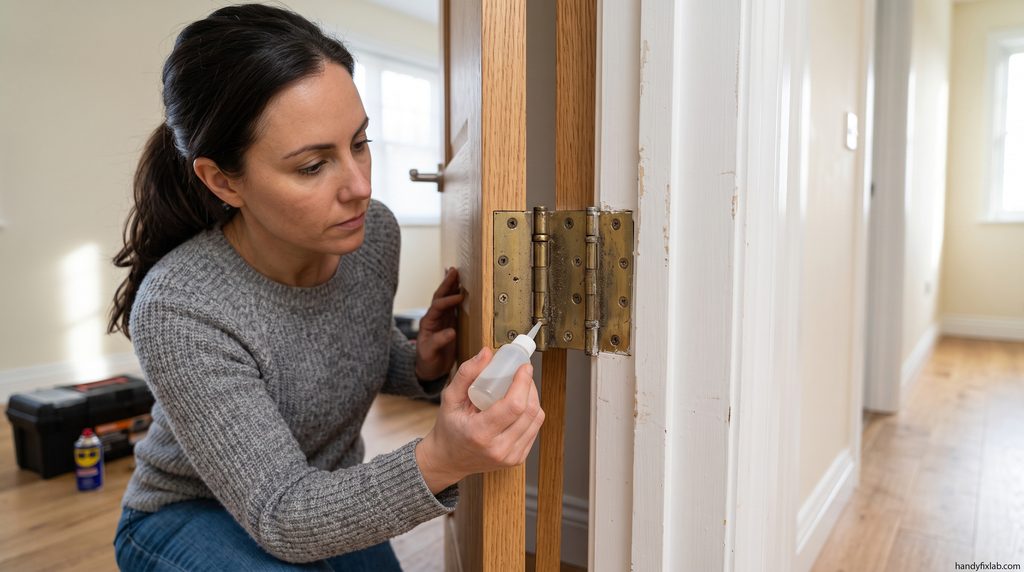
If the door hinge keeps squeaking after lubrication, avoid simply adding more and more lubricant.
Check for:
- Loose hinge screws
- Visible rust
- A bent hinge
- Uneven gaps around the door
- A door rubbing against the frame
- Excessive movement in the hinge
- Damaged or worn hardware
If lubrication helps only briefly, there may be an underlying mechanical problem. A misaligned or worn hinge can continue creating friction even after it has been lubricated.
If the door is also sticking or rubbing against the frame, our guide How to Fix a Sticking Door: 5 Easy DIY Fixes may help you check the alignment.
When Should You Replace a Door Hinge?
A hinge may need replacement if it has severe rust, visible damage, excessive movement, or worn parts that prevent it from moving smoothly.
You should also avoid forcing a heavy or unstable door if you are not confident supporting it safely. Specialized doors, such as fire-rated or security doors, may require specific hardware and should be handled according to the manufacturer’s requirements.
For a normal interior door, however, a basic inspection, tightening, cleaning, and proper lubrication can often solve a minor squeak.
Final Thoughts
If you are wondering why door hinges squeak, start by checking the simple causes before replacing the hinge.
A dry or dirty hinge, loose screws, poor alignment, and worn hardware can all create unwanted noise. Identify the source first, then clean, tighten, and lubricate the hinge as appropriate.
If the squeak keeps returning, look for an underlying alignment or hardware problem instead of repeatedly adding lubricant.