
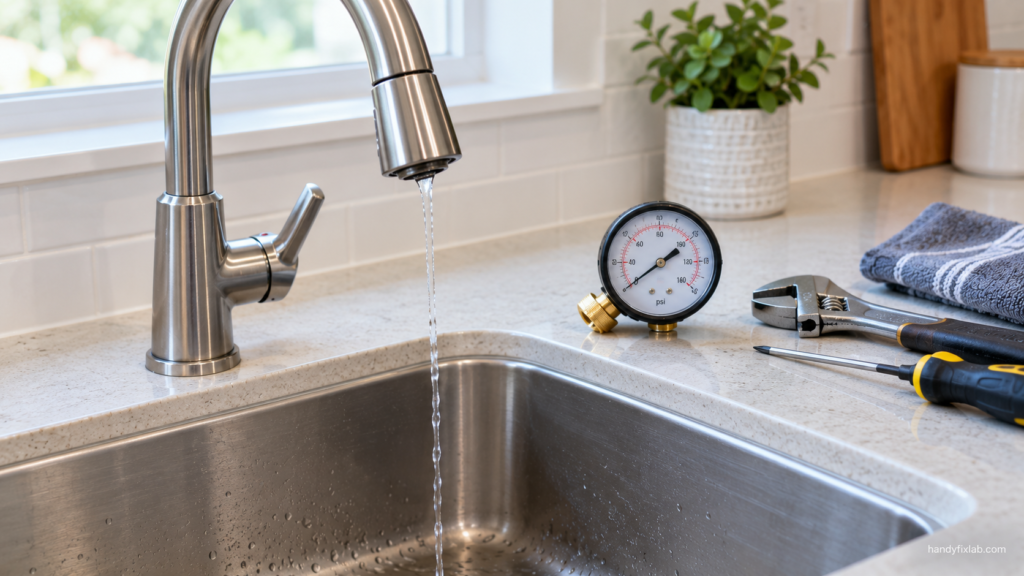
Low water pressure can make showers weak, faucets slow, and appliances take longer to fill.
Low water pressure can turn a normal shower into a slow trickle or make your kitchen faucet take forever to fill a pot. The good news is that some causes are simple to check and fix yourself.
Before calling a plumber, work through these basic checks. The problem may be a partially closed valve, a clogged faucet aerator, or a local plumbing issue rather than a major pipe problem.
How to Check for Low Water Pressure
If the problem affects the entire house, check the pressure instead of relying only on how the water feels.
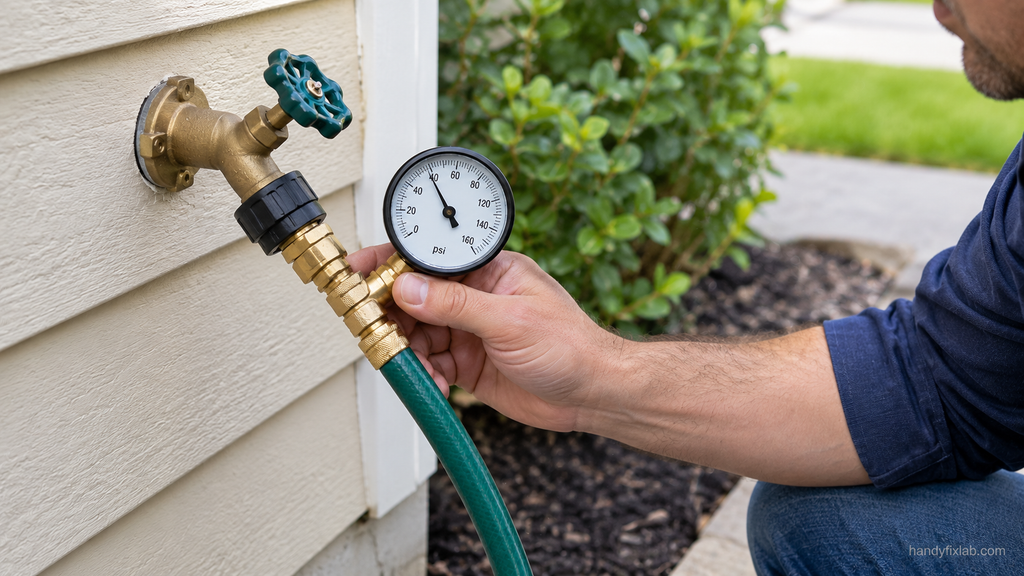
A simple water pressure gauge can be attached to an outdoor hose bib. Turn off faucets, washing machines, and other water-using fixtures before taking the reading.
The EPA WaterSense program recommends incoming service pressure of about 45 to 60 PSI for efficient operation of household fixtures and appliances.
If the pressure is much lower than expected, continue with the checks below.
1. Check the Main Water Valve
One of the easiest things to check is the main water shutoff valve.
If the valve was recently used during plumbing work, it may not have been opened completely. A partially closed valve can restrict water flow throughout the house.
Locate your home’s main shutoff valve and make sure it is fully open according to the valve design. Do not force a valve that is stuck or difficult to turn.
If opening the valve does not improve the pressure, move to the next check.
2. Clean a Clogged Faucet Aerator
If low pressure affects only one faucet, the problem may be much simpler.
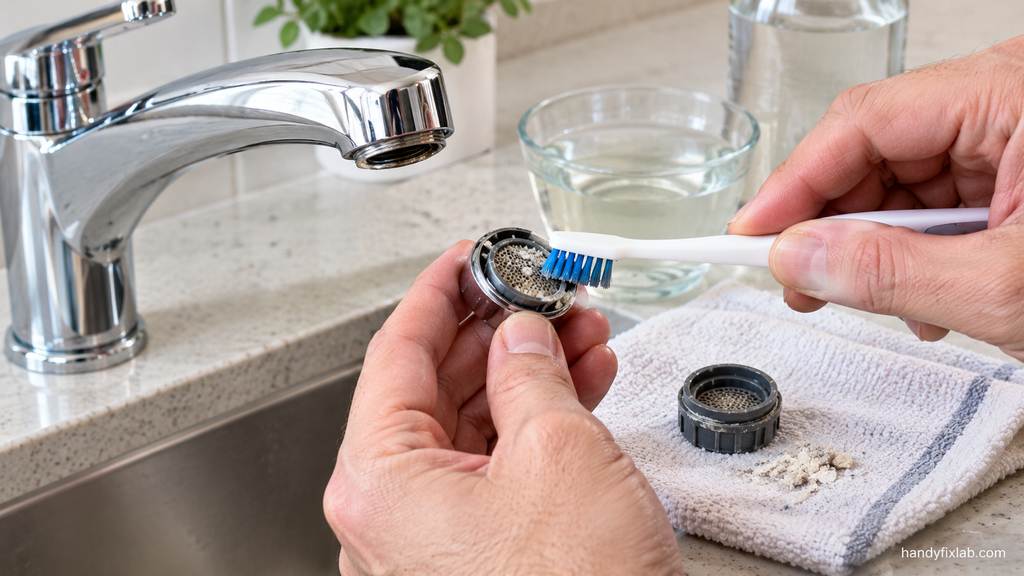
The small screen at the end of many faucets is called an aerator. Mineral deposits and debris can build up inside it and restrict the water flow.
Unscrew the aerator carefully and rinse away any debris. If mineral buildup is stubborn, soak the removable parts in white vinegar before rinsing them thoroughly.
Reinstall the aerator and test the faucet.
If the water pressure returns to normal, you have solved the problem without touching the rest of the plumbing.
3. Check the Showerhead
A shower can have weak water flow even when other fixtures work normally.
Remove the showerhead if possible and inspect the openings for mineral deposits or debris. Clean the removable parts and rinse them before reinstalling the showerhead.
If the kitchen and bathroom faucets have normal flow but the shower remains weak, the restriction may be inside the showerhead or its connection.
4. Look for Signs of a Water Leak
A leak can reduce the amount of water reaching your fixtures. Some leaks are obvious, while others can remain hidden inside walls or under floors.
Check underneath sinks, around toilets, near exposed pipes, and around water-using appliances for dampness or unexplained water.
You can also check your water meter when no water is being used. If the meter continues to register water use, there may be a leak somewhere in the plumbing system.
A suspected hidden leak should be investigated promptly to prevent water damage.
5. Check Whether the Problem Affects the Whole House
If every faucet and shower suddenly has weak water flow, the problem is probably not a single clogged aerator.
Possible causes include a partially closed valve, a faulty pressure-regulating valve, a leak, mineral buildup in older pipes, or an issue with the incoming water supply.
Ask a neighbor whether they are experiencing the same problem. If several homes are affected, the issue may be with the local water supply rather than your home’s plumbing.
When to Call a Plumber
Get professional help if:
- Water pressure suddenly drops throughout the house.
- You suspect a hidden or major leak.
- The main valve is stuck or damaged.
- Pressure remains very low after basic checks.
- You have severely corroded or old pipes.
- A pressure regulator appears to be malfunctioning.
Avoid making major adjustments to a pressure regulator unless you know exactly how your plumbing system is designed. Excessive water pressure can damage pipes, fixtures, and appliances.
Final Tips
When low water pressure appears, start with the simplest possibilities. Check the main valve, clean clogged faucet or showerhead components, and look for signs of leaks.
If only one fixture has weak flow, the problem is often local. If the entire house is affected, measure the pressure and investigate the main plumbing system before attempting a repair.
A few simple checks can sometimes restore normal water flow without an expensive plumbing visit.
Fixing low water pressure often starts with a few simple checks around your home.