
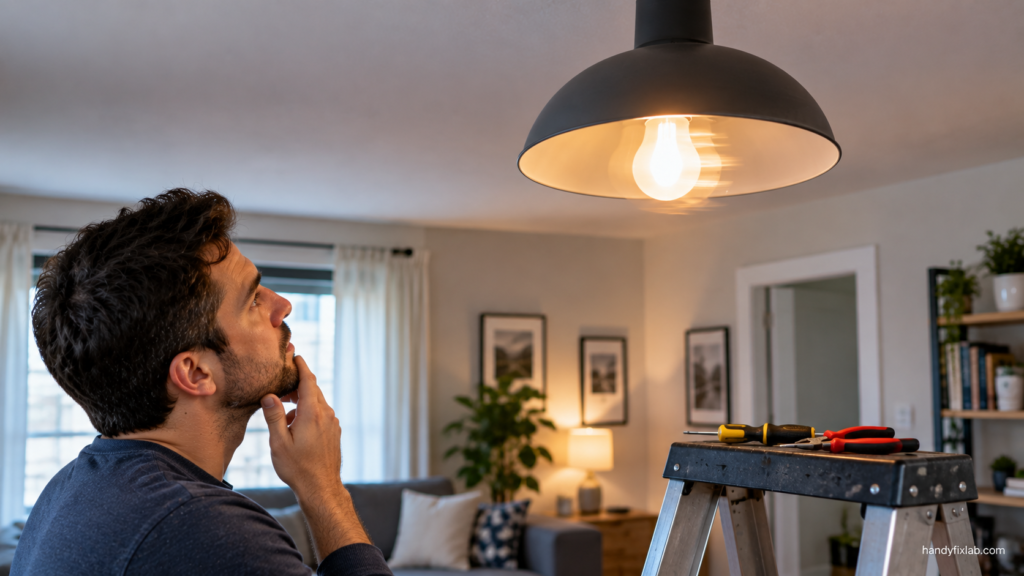
Lights flickering can be annoying, but the cause is not always serious. Sometimes the problem is simply a loose bulb or an incompatible LED bulb. In other cases, flickering can point to a wiring or electrical problem that needs professional attention.
Before assuming there is a major fault, check these common causes and learn when it is safer to call an electrician.
1. A Loose Light Bulb
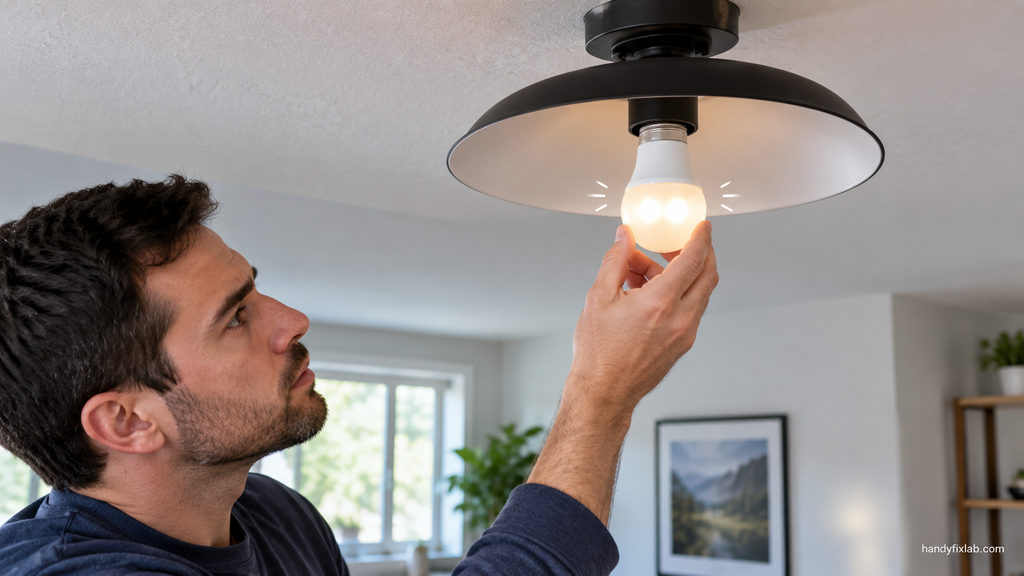
One of the easiest causes of lights flickering is a bulb that is not seated properly in its socket.
Turn the light off and allow the bulb to cool. Then gently tighten it. Do not force it, especially if the bulb or socket appears damaged.
If the flickering stops, the loose connection was likely the cause.
2. A Failing or Old Bulb
Light bulbs can flicker as they reach the end of their useful life. This is especially common with older fluorescent bulbs, but LED bulbs can also develop problems.
Try replacing the bulb with a new one of the correct type and wattage.
If the new bulb works normally, the old bulb was likely the problem.
3. An LED Bulb Compatibility Problem
Some LED bulbs may flicker when used with older dimmer switches or incompatible fixtures.
If the problem happens only when using a dimmer, check whether the LED bulb is labeled as dimmable and whether the dimmer is designed for LED lighting.
Replacing an incompatible bulb or using a compatible dimmer may solve the issue.
4. A Loose Connection
If one light fixture continues flickering after you replace the bulb, there could be a loose connection in the fixture or its wiring.
Warning signs include buzzing, crackling, burning smells, discoloration, or a fixture that feels unusually hot.
Do not remove electrical covers or attempt to repair household wiring unless you are qualified to do so. Turn the circuit off if you can safely identify the correct breaker, and contact a qualified electrician.
5. Too Many Electrical Loads
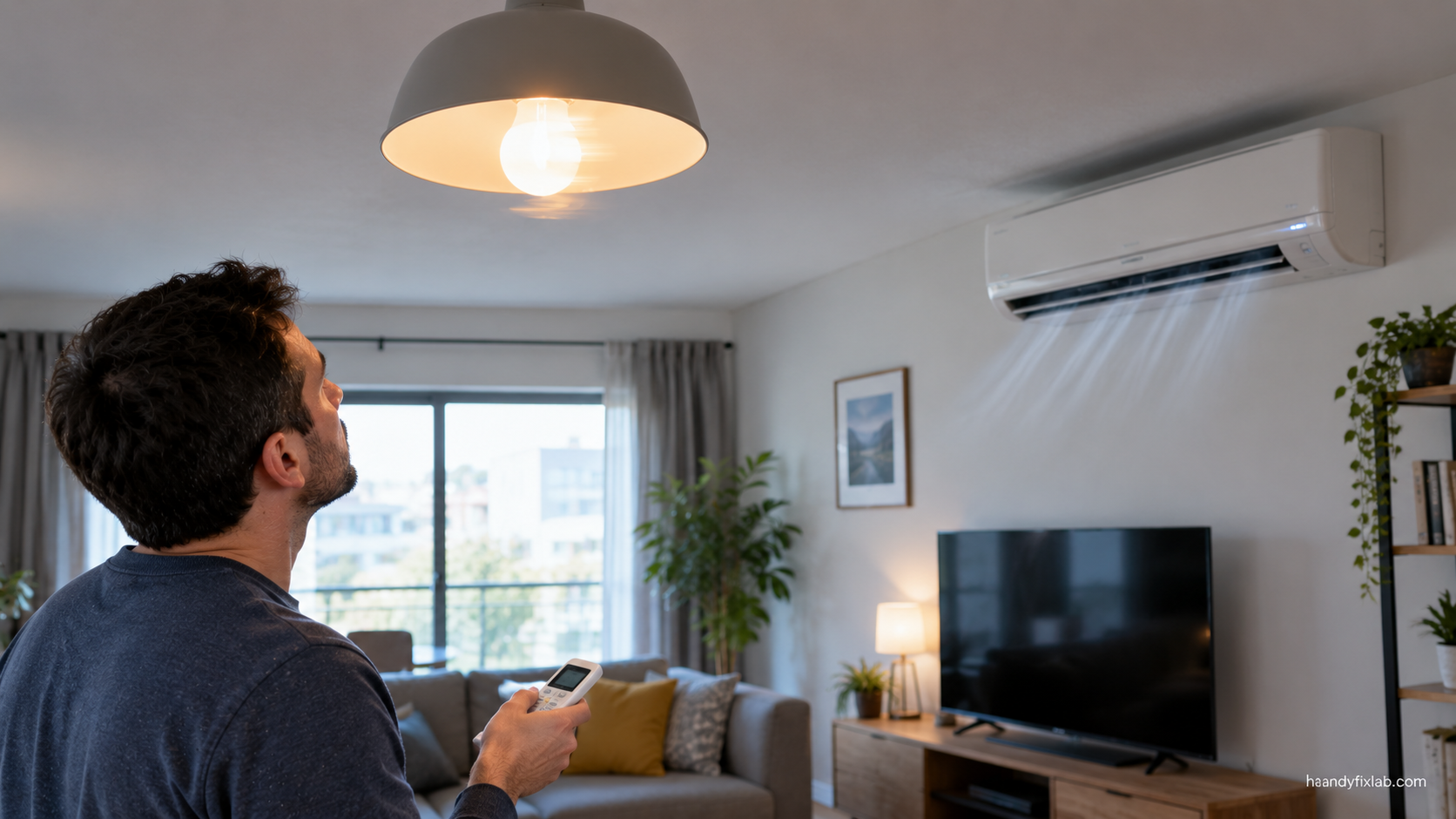
Sometimes lights flickering can occur when a large electrical appliance starts or operates.
For example, an air conditioner, refrigerator, washing machine, or other high-power appliance may cause a temporary voltage drop when its motor starts.
If lights briefly dim or flicker whenever a particular appliance switches on, the electrical load may need to be checked by a professional.
6. A Problem With the Circuit Breaker or Electrical Panel
A loose connection, damaged breaker, or other electrical-panel problem can affect lights connected to the same circuit.
If several lights flicker at the same time, especially in different rooms, pay attention to whether other electrical problems occur as well. If you are also having problems with a wall switch, see our guide on light switch problems.
Do not open the electrical panel or attempt to tighten internal connections yourself. Electrical panels contain dangerous voltages even when some breakers are switched off.
7. A Problem With the Power Supply
If lights throughout your home flicker, the issue may be larger than a single bulb or fixture.
The problem could involve the home’s electrical service, incoming voltage, or a connection outside the home.
Ask a neighbor whether they are experiencing similar flickering. If multiple homes are affected, contact your electricity provider. If the problem appears to be limited to your home, have a qualified electrician inspect the system.
When to Call an Electrician
Some flickering problems are simple, but certain warning signs should not be ignored.
Get professional help if:
- Lights flicker repeatedly after replacing the bulb.
- Several lights flicker at the same time.
- You hear buzzing or crackling.
- You smell burning or see scorch marks.
- An outlet, switch, or fixture feels unusually hot.
- The problem occurs when major appliances turn on.
- You suspect a wiring or electrical-panel problem.
Electrical problems can create a fire or shock hazard, so avoid experimenting with wiring if you are unsure what is causing the problem.
Final Tips
When lights flickering starts, begin with the simplest checks: make sure the bulb is properly installed and try a new compatible bulb.
If the problem continues, look for patterns. A single flickering light may have a local bulb or fixture problem, while several flickering lights can indicate a circuit, load, or power-supply issue.
Knowing when to stop troubleshooting and call a professional is just as important as knowing what to check yourself.